

TL;DR:
- Soft washing the building envelope with biodegradable detergents and high-pressure cleaning greasy concrete minimizes water intrusion and damage risks. Proper assessment, protection, and documented wastewater disposal are essential to comply with local regulations and avoid liability. Regular cleaning with clear records prolongs asset lifespan and sustains premises safety.
Soft wash the building envelope; hot-water pressure wash greasy concrete and dumpster pads. That’s the short answer. Before you or a hired crew touch a nozzle, run this quick checklist:
- Assess surface materials (brick, stucco, EIFS, glass, metal, concrete)
- Confirm local stormwater permit requirements and prepare a wastewater containment plan
- Protect signage, HVAC intakes, landscaping, and electrical fixtures
- Run a test patch on an inconspicuous area; wait 24–72 hours
- Select method: soft wash for the building envelope, hot-water pressure for greasy concrete
- Execute in zones, recover wash water, and neutralize runoff per EPA stormwater guidance
- Document with before/after photos and retain MSDS for every detergent used
Request a written wastewater plan and MSDS from any vendor before work begins, or contact Whitediamondpressurewashing for a professional site assessment and free estimate.
Table of Contents
- How to pressure wash a storefront: the full step-by-step process
- Soft washing vs. high-pressure washing: which method fits your surface?
- What to protect and prepare before cleaning starts
- Equipment, nozzles, and detergents: what pros actually use
- U.S. wastewater rules every property manager should know
- Safety, insurance, and liability during a storefront wash
- How often should you schedule storefront cleaning?
- What to ask before hiring a storefront pressure-washing pro
- What drives cost and how long a cleaning takes
- Key Takeaways
- The case for treating your storefront like infrastructure
- Whitediamondpressurewashing handles the whole job for you
- Useful sources and where to verify local rules
How to pressure wash a storefront: the full step-by-step process
Step 1 — Assessment. Walk the entire frontage. Note surface types, stain categories (organic growth vs. grease vs. pollution film), and any cracked mortar, peeling paint, or damaged caulk. Photograph everything before a single drop of water hits the building.
Step 2 — Permit and wastewater check. Contact your city public works or county environmental services office to confirm whether a stormwater permit is required. Many municipalities prohibit wash water from entering storm drains, even for routine cleaning.
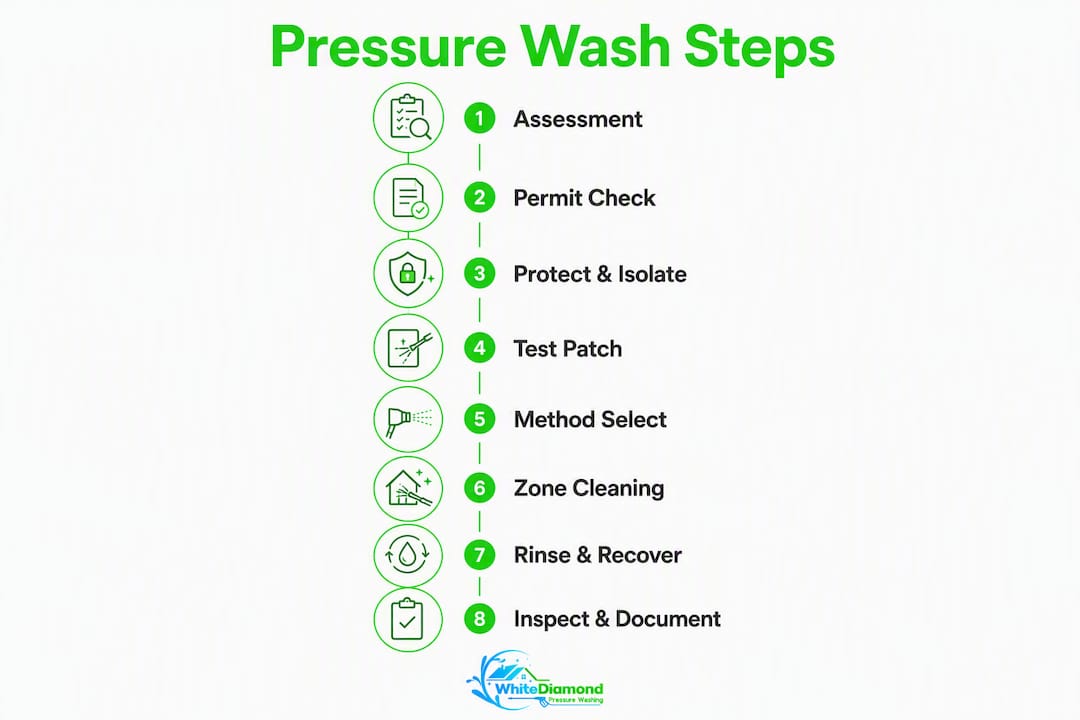
Step 3 — Protect and isolate. Cover electrical outlets, light fixtures, and signage with plastic sheeting secured by gaffer tape. Bag nearby HVAC intakes. Place sandbags or containment booms at drain openings. Move any merchandise or displays inside.

Step 4 — Test patch. Pick a small, low-visibility area. Record the PSI, nozzle angle, chemical name, dilution ratio, and dwell time. Photograph the patch before and after, then wait at least 24 hours (72 for painted or stucco surfaces) to check for discoloration, lifting, or water intrusion.
Step 5 — Method selection. Soft washing uses low pressure with biodegradable detergents to lift mold, mildew, and algae at the root. High-pressure hot water is reserved for concrete sidewalks, dumpster pads, and loading docks where grease and heavy buildup require force and heat.
Step 6 — Execute in zones. Work top to bottom, section by section. Rinse each zone before moving to the next to prevent detergent from drying on the surface.
Step 7 — Rinse, neutralize, and recover wastewater. Collect wash water using wet-vac recovery or filter bags. Dispose of contaminated water off-site or per local rules. Never route it to a storm drain.
Step 8 — Inspect and document. Photograph the finished surface from the same angles as your pre-clean shots. Note any areas needing follow-up and file the MSDS, test-patch record, and photos in your property maintenance folder.
Pro Tip: Always photograph the test patch under the same lighting conditions as the pre-clean shots. That single image has resolved more contractor disputes than any written contract clause.
Soft washing vs. high-pressure washing: which method fits your surface?
Soft washing removes organisms rather than just surface film, which is why results last longer than high-pressure cleaning alone. High pressure is fast and effective on durable surfaces, but misapplied on stucco or painted wood it can force water behind cladding, lift paint, or erode mortar.
| Surface | Recommended method | Main risk if wrong method used |
|---|---|---|
| Stucco / EIFS / painted brick | Soft wash (low pressure + detergent) | Water intrusion, paint lifting, mortar erosion |
| Metal panels / cladding | Soft wash or low-pressure rinse | Denting, coating damage, rust acceleration |
| Glass storefronts | Low-pressure fan rinse, no detergent on seals | Seal failure, streaking, frame corrosion |
| Fabric awnings | Soft wash, hand-brush assist | Fabric tear, color fade, frame stress |
| Concrete sidewalks / entryways | High-pressure cold or hot water | Minimal if surface is sound; avoid cracked slabs |
| Dumpster pads / drive-throughs | Hot-water high-pressure | Odor and grease remain if cold water only |
Older coatings and delicate substrates almost always need soft washing to avoid water intrusion and paint or mortar damage. When in doubt, soft wash first and escalate pressure only if soiling remains after the detergent dwell.
Test patch protocol: choose a corner or recessed area, apply the planned chemical at the planned dilution, wait the full dwell time, rinse at the planned PSI, and photograph the result. If the surface shows any reaction, drop the PSI or switch to a milder detergent before proceeding.
What to protect and prepare before cleaning starts
Skipping prep is where most storefront cleaning jobs go sideways. A few minutes of protection prevents hours of remediation.
- Post wet-floor signage at all entry points before water touches the ground
- Cover all exterior electrical fixtures, outlets, and conduit runs with plastic sheeting and gaffer tape
- Tape off HVAC intakes and fresh-air vents; overspray and detergent fumes can enter the building
- Bag or cover landscaping and potted plants near the work zone
- Move merchandise, A-frame signs, and outdoor displays inside
- Place sandbags or containment booms at nearby storm drain openings
- Confirm with the vendor that they will isolate or capture all wash water
Pro Tip: Schedule cleaning during off-hours or early morning windows. Surfaces dry before customers arrive, slip hazards are minimized, and you avoid disrupting foot traffic or deliveries.
Ask any vendor for a written site-protection plan before they start. If they cannot produce one, that tells you something.
Equipment, nozzles, and detergents: what pros actually use
Rental-grade cold-water units top out around 1,500–2,000 PSI and lack the chemical injection systems that make soft washing effective. Commercial soft-wash rigs run at 40–80 PSI with downstream chemical injection, which is a fundamentally different machine. For greasy concrete, hot-water units outperform cold-water units because heat breaks down fats and neutralizes odors in ways that pressure alone cannot.
Nozzle selection matters as much as PSI. A 25° nozzle concentrates force for concrete cleaning; a 40° or wider fan nozzle disperses it for delicate surfaces. Rotary or turbo nozzles are for concrete only.
- Soft-wash systems: low pressure, downstream chemical injection, biodegradable surfactants
- Hot-water pressure units: for grease, oil, dumpster pads, and food-service areas
- Medium-angle nozzles for concrete; wide-fan or low-angle nozzles for facades and glass
- Adjustable wands for elevated work on canopies and upper facade sections
Always require an MSDS for every cleaning solution a vendor brings on-site. Confirm that products are biodegradable and compatible with local wastewater disposal rules. Ask for a materials and PSI spec sheet in the written quote so your maintenance record documents safe limits for each substrate. Understanding how water pressure affects surfaces is the difference between a clean facade and a repair bill.
Pro Tip: Request the MSDS before the crew arrives, not after. Some detergents require neutralization before disposal, and you need that information in your property file regardless of who does the work.
U.S. wastewater rules every property manager should know
The EPA’s stormwater program prohibits non-stormwater discharges, including wash water containing detergents, grease, or sediment, from entering storm drains. Violations can result in fines from local municipal separate storm sewer system (MS4) authorities. Rules vary by municipality, so always check with your city public works or county environmental services office before scheduling a cleaning.
Vendor request language to use:
- “Provide your written wastewater containment and disposal plan before work begins.”
- “Supply MSDS for all cleaning solutions and evidence of any required local permit compliance.”
- “Confirm in writing how captured wash water will be disposed of.”
Red flags to watch for:
- Vendor cannot explain their capture or disposal method
- No MSDS available for detergents on-site
- Proposal routes wash water directly to a storm drain
- No mention of containment booms, filter bags, or wet-vac recovery
Best-practice controls include containment booms at drain openings, filter bags on recovery hoses, wet-vac collection for contaminated water, and off-site disposal at an approved facility.
Safety, insurance, and liability during a storefront wash
Premises liability exposure during a cleaning job is real. Wet surfaces, pedestrian traffic, and elevated work all create risk. The right vendor carries the right paper.
Insurance to require before signing anything:
- Commercial general liability (minimum $1 million per occurrence is common for commercial work)
- Workers’ compensation covering all on-site crew
- Pollution liability if wastewater handling or chemical application is involved
Documentation to collect and file:
- Before/after photographs from consistent angles
- Written method statement specifying PSI, nozzle, chemical, and dwell time per surface
- MSDS for every product used
- Wastewater containment and disposal plan
- Incident and cleanup protocol in case of spill or surface damage
Safety procedures a reputable crew follows:
- Wet-floor signage and pedestrian diversion barriers at all entry points
- Electrical lockout or cover for all exterior fixtures before water is applied
- Fall protection for any elevated work above six feet
- Non-slip footwear and PPE for all crew members
Vendors who arrive without certificates of insurance or refuse to provide a written safety plan are a liability you do not want on your property. Review industry standards for pressure washing safety before finalizing any vendor agreement.
How often should you schedule storefront cleaning?
Frequency depends on traffic volume, surface exposure, and local climate. A shaded storefront in a low-traffic strip center needs less frequent attention than high-traffic retail storefronts, which generally require monthly to bi-monthly cleaning.
| Area | Recommended frequency |
|---|---|
| Customer entryways and sidewalks | Monthly or bi-monthly |
| Glass storefronts and window frames | Monthly to bi-monthly |
| Building facades (stucco, brick, metal) | Quarterly to semi-annual |
| Parking lots and drive lanes | Quarterly |
| Dumpster pads and loading docks | Monthly to quarterly depending on grease load |
A coordinated maintenance plan that assigns frequencies by traffic and surface type reduces administrative overhead and extends surface life. Build the schedule into recurring service contracts with adjustable frequency clauses for peak seasons, tenant turnover, or post-storm cleanings.
Documented recurring cleaning also supports premises-liability defense. A property with a consistent, photographed maintenance record is in a far stronger position than one cleaned sporadically with no paper trail. Exterior cleaning is an asset-protection strategy as much as a curb-appeal one.
What to ask before hiring a storefront pressure-washing pro
Not every contractor who owns a pressure washer is qualified to clean a commercial storefront. Use this checklist before signing anything.
Questions to ask every vendor:
- Do you use soft washing, high-pressure, or both? What determines which method you use on each surface?
- Do you have hot-water capability for grease areas?
- Can you provide MSDS for every product you plan to use?
- What is your wastewater containment and disposal plan?
- Can you provide certificates of insurance for general liability, workers’ comp, and pollution liability?
- Do you have commercial references, specifically from storefront or retail clients?
- Will you run a documented test patch before full application?
Contract clauses to include:
- Scope of work with PSI and chemical specs per surface
- Hold-harmless language and damage rework clause
- Scheduled frequency and change-order pricing
- Cleanup and disposal obligations
- Photo documentation deliverable (before, test patch, after)
Red flags:
- No MSDS for cleaning products
- No wastewater plan or vague answer about drain disposal
- Pricing with no line-item breakdown by surface
- No commercial references
- Unwillingness to run a test patch
Whitediamondpressurewashing provides clear documentation, proof of local compliance, and photo reports as standard practice. Use the vendor evaluation checklist to compare any contractor you are considering.
What drives cost and how long a cleaning takes
No honest contractor can quote a storefront without seeing it. That said, the main cost drivers are consistent across jobs.
Cost factors:
- Total square footage of surfaces to be cleaned
- Number of distinct surface types (each may require a different method and chemical)
- Level of soiling (light film vs. heavy grease or organic growth)
- Need for hot-water equipment or specialized detergents
- Access and height (ground-level vs. elevated canopy or second-story facade)
- Wastewater containment and disposal requirements
- One-off service vs. recurring contract pricing
Typical timeframes (qualitative estimates only):
- Small single-surface storefront: 1–3 hours
- Medium storefront with canopy, windows, and entry concrete: 3–6 hours
- Multi-surface site with parking area and dumpster pad: half to full day
Quote request tips:
- Request line-item pricing by surface type
- Confirm what is included: containment, MSDS, test patch, photo report
- Get change-order pricing in writing before work starts
- Include a rework clause if surface damage results from misapplied pressure
Key Takeaways
Soft washing the building envelope and using hot-water pressure for greasy concrete is the safest, most effective approach to commercial storefront cleaning, and documented recurring service protects both the property and its owner from liability.
| Point | Details |
|---|---|
| Method selection matters | Soft wash building envelopes; reserve hot-water high pressure for concrete, dumpster pads, and grease areas. |
| Test patch before full application | Record PSI, nozzle, chemical, and dwell time; photograph before and after; wait 24–72 hours for material reaction. |
| Wastewater compliance is non-optional | Require a written containment and disposal plan; never allow wash water to enter storm drains. |
| Maintenance frequency by area | Entryways and sidewalks monthly or bi-monthly; facades quarterly to semi-annual; dumpster pads monthly to quarterly. |
| Whitediamondpressurewashing | Provides soft washing, hot-water concrete cleaning, MSDS documentation, and photo reports for commercial storefronts in Citrus County and surrounding regions. |
The case for treating your storefront like infrastructure
Most property managers think about storefront cleaning the way they think about painting: do it when it looks bad. That framing costs money.
Organic growth, mold, and mildew are not cosmetic problems. Left untreated, they degrade sealants, accelerate mortar erosion, and create slip hazards that generate liability claims. A storefront that gets cleaned quarterly with documented photo records is a defensible asset. One that gets cleaned “when someone complains” is a liability waiting to happen.
The other thing most guides miss: the method choice is a materials question, not a preference question. Soft washing is not the “gentle option” for clients who want to be careful. It is the correct method for any surface where water intrusion or coating damage is a real risk. High pressure on stucco or EIFS is not aggressive cleaning; it is deferred damage.
Hire for documentation as much as for cleaning. A vendor who cannot hand you an MSDS, a wastewater plan, and before/after photos is not a professional contractor. They are someone with a machine. The paper trail is what separates a maintenance record from a repair invoice.
Whitediamondpressurewashing handles the whole job for you
If running through vendor checklists and wastewater compliance forms sounds like more work than you signed up for, that is exactly why Whitediamondpressurewashing exists. Every commercial storefront job includes soft washing for building envelopes, hot-water pressure cleaning for concrete and grease areas, glass storefront cleaning, MSDS documentation for every product used, a written wastewater containment plan, proof of insurance, and before/after photo reports.

Scheduling is flexible around your operating hours, so entryways are clean and dry before your first customer walks in. Recurring maintenance plans are available with adjustable frequency and documented results built in. Visit Whitediamondpressurewashing to request a free estimate or book a site assessment for your storefront today.
Useful sources and where to verify local rules
Before scheduling any storefront cleaning, confirm the following with your local authorities and retain copies in your property maintenance file.
- EPA stormwater program: The U.S. Environmental Protection Agency’s MS4 stormwater guidance governs what may enter storm drains. Start at epa.gov/npdes/stormwater and follow links to your state’s program.
- City public works or county environmental services: Your local office is the authoritative source for permit requirements, approved disposal sites, and any local surcharges or restrictions on cleaning detergents.
- MSDS / Safety Data Sheets: Require a current SDS (formerly MSDS) for every cleaning product used on your property. File it with your maintenance records. OSHA’s Hazard Communication Standard (29 CFR 1910.1200) governs SDS format and availability.
- Local health department: For food-service storefronts and restaurant exteriors, your county health department may have additional requirements for grease trap areas and dumpster pad cleaning.
- Property maintenance file: Save all permits, MSDS documents, wastewater disposal receipts, and before/after photos in a single folder per cleaning event. That file is your first line of defense in any premises-liability dispute.
This article provides general information about storefront cleaning methods and vendor selection. It is not legal, environmental, or regulatory advice. Confirm current rules with your local public works office, county environmental services, or a qualified professional before scheduling work.
Recommended
- Soft Washing Process Explained: A Step-by-Step Guide for Safety – white-diamond-pressure
- Avoid These Pressure Washing Mistakes: Safer, Cleaner Home – white-diamond-pressure
- Walkway Cleaning Checklist for Homeowners in 2026 – white-diamond-pressure
- Pressure Washing Safety – How It Protects Your Home – white-diamond-pressure
2 thoughts on “How to Pressure Wash a Storefront Safely in 2026”