

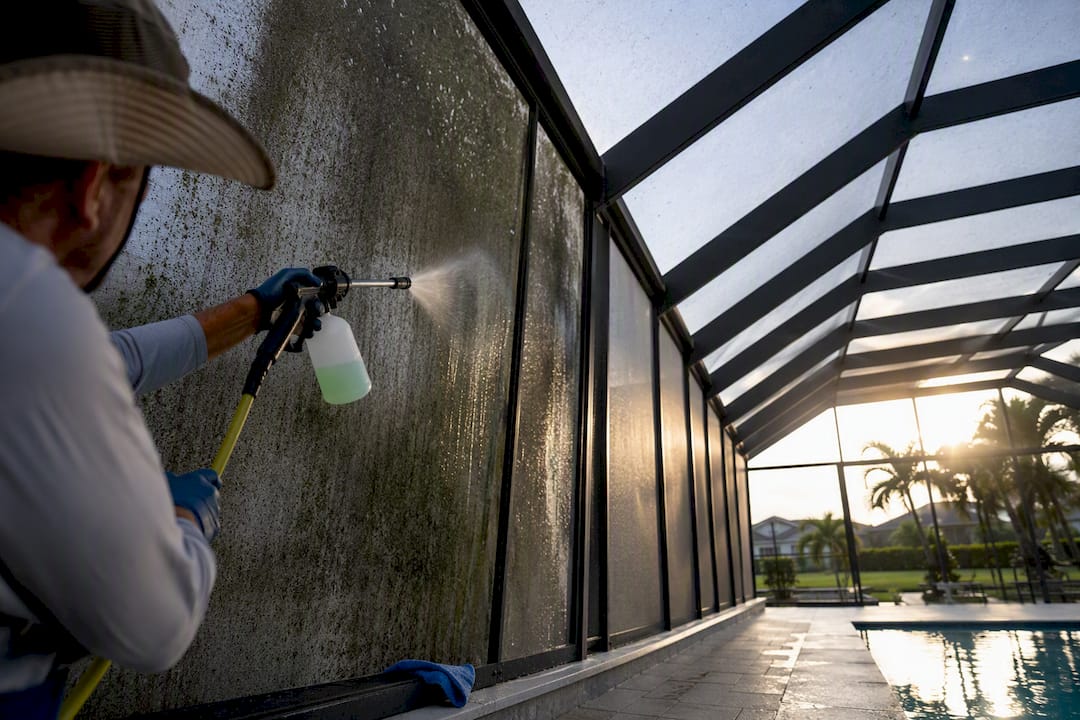
The safest, most effective way to handle screen enclosure cleaning algae problems is a low-pressure soft wash: a diluted sodium hypochlorite solution applied with a surfactant, left to sit, then rinsed off. Skip the power washer. High-pressure blasting tears mesh, loosens spline, and leaves algae spores behind to grow right back. If the growth is heavy, the frame shows oxidation stains, or you don’t want to handle chlorine at height, call a pro instead of guessing.
TL;DR:
- Proper soft washing uses diluted sodium hypochlorite to kill algae at its root, preventing quick regrowth, unlike high-pressure blasting which leaves spores behind.
- Heavy algae growth often requires a 1% to 3% bleach solution and a thorough top-down application, followed by a low-pressure rinse to avoid mesh damage.
- Regular inspections and monthly maintenance, especially in shaded or humid areas, help keep algae levels low and extend the time between professional deep cleans.
- DIY methods like oxygen bleach or vinegar are suitable for light or recent algae but are ineffective against established growth, which needs proper chemical treatment.
- Professional soft washing includes careful chemical handling, protection for landscaping, and cleaning both sides of the mesh, with costs depending on enclosure size and algae severity.
Table of Contents
- Why Algae Grows on Screen Enclosures (and Why That Changes How You Clean)
- How Do You Soft Wash a Screen Enclosure Yourself?
- What Are the Best Alternatives for Spot Cleaning Algae?
- How Often Should You Clean and Inspect Screen Enclosures?
- When Should You Hire a Pro for Screen Enclosure Cleaning?
- Why Trust White Diamond Pressure Washing’s Approach to Algae Removal
- Why the Standard Algae Cleaning Advice Gets Half the Story Right
- Ready to Book a Professional Soft Wash?
- Where to Read More on Safe Screen and Enclosure Cleaning
- Sources
- FAQ
Why Algae Grows on Screen Enclosures (and Why That Changes How You Clean)
Screen enclosures are practically a greenhouse for algae. Shade from the roofline, humidity off the pool, nearby shrubs, and drifting pollen all combine into exactly the damp, low-light conditions algae and mildew need to colonize mesh fibers.
Once established, these organisms don’t just sit on the surface. They root into the weave of the screen and produce organic acids as a byproduct, which can accelerate oxidation of aluminum framing if the growth is left untreated for months at a time. That is the real argument for soft washing over blasting: only a chemical kill addresses the root system, not just what you can see.
A few things stack the odds against you:
- North-facing or heavily shaded panels stay wet longer after rain or pool splash.
- Overhanging trees and shrubs drop pollen and organic debris directly onto the mesh.
- Poor airflow around enclosed lanais keeps humidity trapped against the screen.
- Sprinklers or pool overspray that hit the same panels daily create a permanent damp zone.
Pressure alone strips the visible black and green streaks, but spores survive in the mesh weave and regrow within weeks. Soft-wash chemistry actually kills the organism, which is why treating the cause instead of the stain produces results that hold up.
How Do You Soft Wash a Screen Enclosure Yourself?
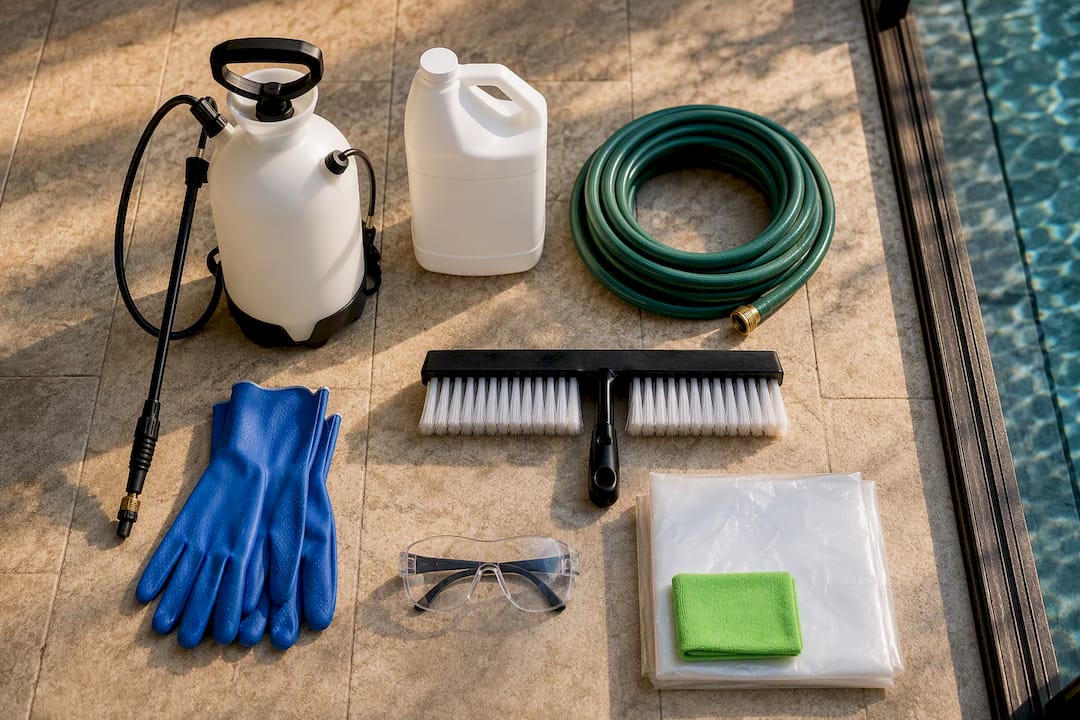
Here’s the supply list before you start: a low-pressure pump sprayer or a soft-wash rig set below 300 PSI, sodium hypochlorite (standard household bleach works, or a professional-grade soft-wash concentrate), a surfactant designed to help the solution cling to vertical mesh, a garden hose, a soft-bristle brush for spot scrubbing, rubber gloves, eye protection, and old sheets or plastic to cover sensitive plants.
Heavier, established growth often calls for 1% to 3%, which is roughly what professional crews use depending on contamination level. Add surfactant per the product label, usually a small percentage of total mix volume, so the solution sheets evenly across the screen instead of beading and running off. Measure everything. Never combine bleach with ammonia-based cleaners or other acids; that combination produces dangerous fumes.
Here’s the sequence that actually works:
- Clear the space. Move furniture, cushions, and rugs off the lanai or pool deck.
- Cover what needs protecting. Drape plastic over pool filtration intakes or run the pump so overspray gets filtered out, and cover any potted plants nearby.
- Pre-rinse top to bottom. A quick hose-down knocks loose debris off the frame and screens before chemical goes on.
- Apply the cleaner top-down. Coat the frame first, then the screens, working from the top of the enclosure toward the bottom so runoff carries dirt downward instead of re-depositing it on clean panels.
- Let it dwell. Give the solution 5 to 10 minutes of contact time, which is the typical window professionals use before it starts drying out and losing effectiveness. Check the product label for exact timing.
- Rinse low-pressure, outside-in. Stay under 300 PSI with a wide fan tip, holding the nozzle 18 to 24 inches from the mesh. Rinsing from the inside outward pushes debris in the same direction it entered the screen, which cuts down on tear risk.
- Spot-scrub only where needed. If stubborn patches remain after rinsing, use the soft brush gently rather than increasing pressure.
Pro Tip: Rinse plants down with plain water within 15 to 20 minutes of any overspray, even if you used a biodegradable mix. Chlorine residue on leaves in direct sun can scorch foliage faster than most people expect.
What Are the Best Alternatives for Spot Cleaning Algae?
Not every situation calls for a full bleach-based soft wash. If you’re dealing with a few stubborn spots, sensitive landscaping nearby, or just prefer to start gentler, a few options work for lighter jobs:
- Oxygen bleach (sodium percarbonate) breaks down into oxygen and soda ash, making it a more plant-friendly option for spot stains and light organic residue. It won’t outperform chlorine on deep-set algae, but for touch-ups it’s a solid middle ground, and it’s the same approach we’ve used for safely lifting algae off wood surfaces without damaging nearby plants.
- White vinegar or a baking-soda paste can lift small, recent discoloration, but they lose effectiveness fast on anything that’s been growing for more than a few weeks.
- Commercial outdoor cleaners sold at hardware stores offer a convenient off-the-shelf option for homeowners who want something pre-mixed. Just know that heavy infestations almost always need a real biocide and proper dwell time, not a one-spray fix.
How Often Should You Clean and Inspect Screen Enclosures?
Prevention is cheaper than repeated deep cleans, and it’s mostly a matter of habit. Walk the enclosure once a month and look for early streaking, especially on shaded panels and anywhere pool splash or sprinklers hit the mesh directly. Catching algae early means a quick spot treatment instead of a full soft wash.
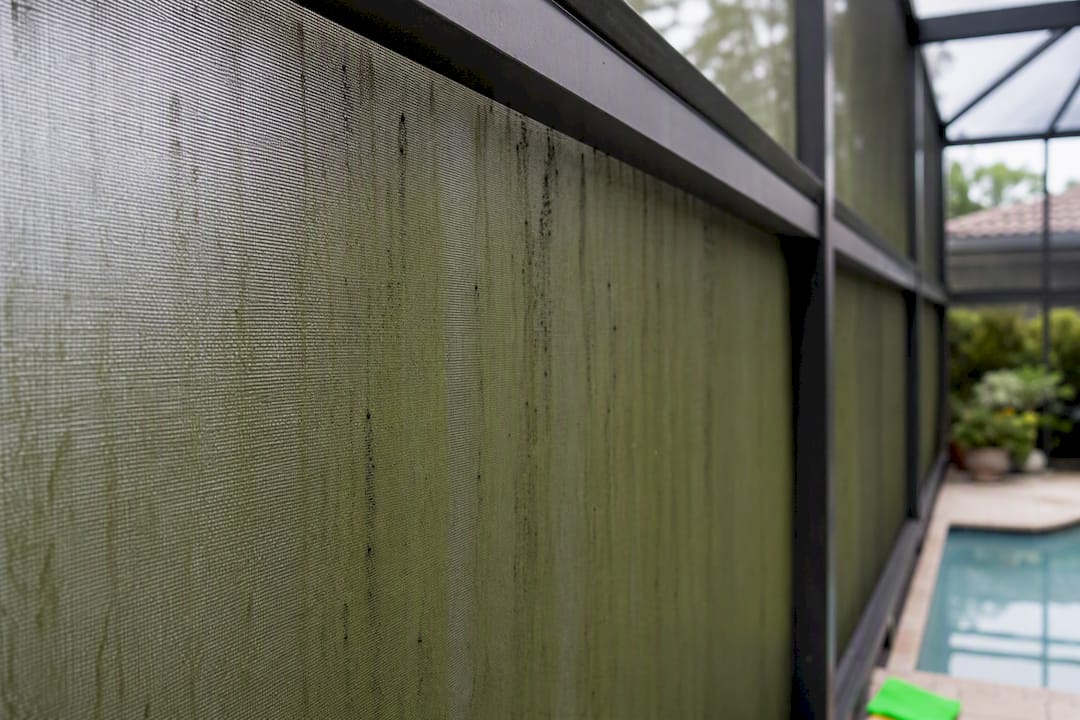
For the deeper clean, a professional soft wash every 12 to 18 months holds up well in most climates, though homes in heavy shade or high humidity often need it closer to twice a year. Soft-washed enclosures in humid regions typically stay clean for 12 to 18 months, compared to just 3 to 4 months after a pressure-only clean, since pressure washing leaves spores intact.
A few prevention habits go a long way:
- Trim back trees and shrubs that shade panels or drop debris onto the screen.
- Redirect sprinkler heads and pool overspray away from mesh panels.
- Improve airflow around enclosed lanais where possible, since stagnant humid air feeds regrowth.
- Check spline, frame joints, and corners near water splash zones during your monthly walk-through, since those spots fail first.
When Should You Hire a Pro for Screen Enclosure Cleaning?
Call a professional when you’re facing heavy algae coverage across most panels, visible oxidation staining on the aluminum frame, an enclosure that’s two stories or otherwise hard to reach safely, torn or fragile mesh that won’t tolerate even light pressure, or when you’d simply rather not handle chlorine solutions yourself.
A reputable soft-wash service brings dedicated low-pressure equipment, measures dilutions rather than eyeballing them, and protects landscaping and pool equipment before a drop of cleaner goes on the screen. Good crews also clean both sides of the mesh when buildup warrants it and will tell you honestly if a panel needs rescreening instead of just charging you for another cleaning it won’t fix.
Before booking anyone, ask these questions:
- What pressure range do you use on screens and frames?
- What chemicals are in your solution, and are they eco-safe around pools and plants?
- Are you insured, and do you offer any guarantee on the work?
- Can you provide references from local enclosure cleaning jobs?
Pro Tip: Ask specifically whether they clean the frame before the screens. Doing it in that order, then rinsing top to bottom, is a detail that separates careful crews from rushed ones.
Why Trust White Diamond Pressure Washing’s Approach to Algae Removal
This guide was put together by Bobby, a contributor who focuses on exterior cleaning topics for homeowners dealing with Florida’s humidity and algae pressure firsthand. This process is built around the same principle laid out above: low-pressure application, biodegradable cleaning agents, and a safety-first approach to chemicals around pools, plants, and pets.
Pool cage and lanai cleaning work follows this soft-wash sequence on every job, not just when a customer asks for it. For a closer look at what that protects long-term, the breakdown on professional pool cage and deck cleaning advantages covers the maintenance side in more detail.
Why the Standard Algae Cleaning Advice Gets Half the Story Right
Most cleaning advice online gets the chemistry right and the judgment wrong. Everyone agrees soft washing beats pressure washing for mesh. Where the advice falls apart is in pretending every enclosure is a DIY job with the right bottle of bleach and a Saturday afternoon.
The dilution ranges and dwell times matter, but so does honesty about your own situation. A single-story lanai with light green film on a few panels? Handle it yourself with the steps above. A two-story pool cage with dark oxidation streaks running down the frame corners? That’s not a bleach problem anymore. That’s a sign water has been sitting against aluminum for a long time, and a homeowner on a ladder with a garden hose is more likely to get hurt than to fix it.
What the research actually supports is this: soft-wash chemistry works because it kills roots, not stains, and that only holds true if the dilution, dwell time, and rinse technique are all correct together. Get one piece wrong and you’ve spent an afternoon with bleach for streaks that come back in six weeks.
— Bobby
Ready to Book a Professional Soft Wash?
If your screen enclosure has gone past what a bucket and soft brush can handle, White Diamond Pressure Washing treats pool cage and lanai cleaning as a soft-wash job every time, not a pressure-washer shortcut. That means measured dilutions, plant and pool protection before the first spray, and a frame-first, top-down process instead of a rushed blast that tears mesh and voids what’s left of your screen’s lifespan.
Request a free estimate through the services page or go straight to booking a lanai cleaning if you already know what your enclosure needs. Whichever route you take, ask the technician directly how they’re protecting your plants and pool equipment and what dilution they’re running. A crew that answers clearly is a crew worth hiring.
Where to Read More on Safe Screen and Enclosure Cleaning
For readers who want to go deeper on technique, the comparison of soft washing versus power washing for pool screens lays out the mesh-damage risk in more detail. The breakdown of algae prevention and removal on pool enclosures covers the oxidation risk to aluminum framing. For pressure specifics and rinse technique, the lanai screen cleaning pro tips guide walks through PSI limits step by step.
Sources
FAQ
How Do I Get Green Algae Off My Screen Enclosure?
Green algae responds well to chlorine; it just needs contact time before rinsing.
How Do You Clean Lanai Screens in Florida’s Humidity?
Florida’s humidity means lanai screens regrow algae faster than in drier climates, so plan on a professional soft wash every 12 to 18 months, or closer to twice a year if the lanai sits in heavy shade. Between deep cleans, monthly spot checks catch new growth before it spreads across the whole panel.
How Can I Remove Mold From My Pool Screen Enclosure?
Mold and mildew respond to the same soft-wash chlorine solution used for algae, since both organisms root into the mesh fibers. For patches near the frame that show staining, cleaning the frame before the screens and rinsing top to bottom prevents mold spores from spreading onto panels you’ve already cleaned.
What Removes Algae Without Scrubbing?
A properly diluted soft-wash solution with the correct dwell time dissolves algae’s root structure well enough that a low-pressure rinse washes it away without scrubbing. Scrubbing should only be a backup step for a few stubborn spots, never the main method.
How Much Does Professional Screen Enclosure Cleaning Cost?
Pricing depends on enclosure size, height, and how heavy the algae buildup is, so current rates are listed directly on the services page rather than as a flat number here.