

TL;DR:
- Proper downspout maintenance involves removing debris, confirming full water flow, and preventing soil saturation near foundations. Regularly combine flushing, mechanical clearing, and vacuum extraction techniques with discharge at least three feet away from the foundation to avoid costly damage. Routine twice-yearly cleaning and prompt repairs protect both your property and your wallet from severe flooding and foundation issues.
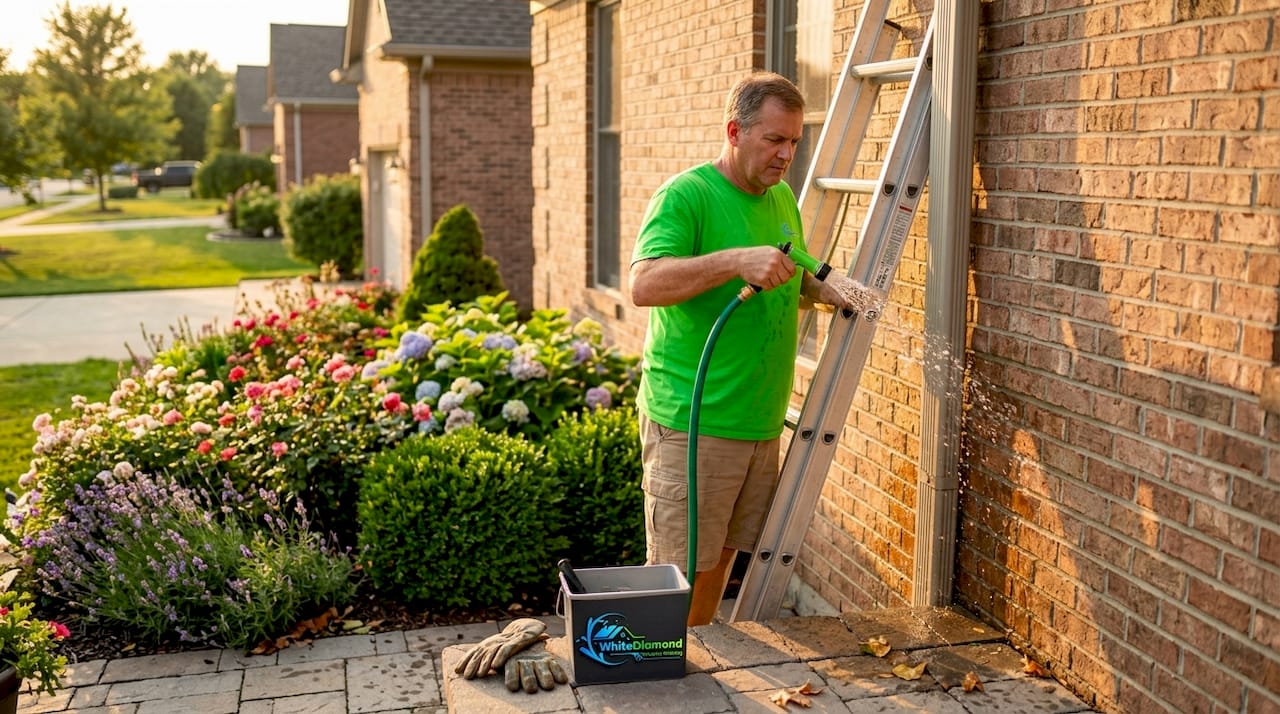
Downspout cleansing is the process of removing debris from vertical downspout pipes and verifying unobstructed water flow from the roofline to the discharge outlet, away from a property’s foundation. The industry standard term is downspout cleaning, and the full service scope follows a clear sequence: clear the gutter trough, flush the downspout with pressurized water, and mechanically unclog any blockage that flushing does not resolve. Neglected downspouts cause basement flooding, foundation erosion, and fascia rot. With proper maintenance, downspouts can last up to 50 years, making routine cleaning one of the highest-return maintenance habits a homeowner can build. This guide covers every method, tool, and schedule you need to protect your property.
What methods and tools are used to clean downspouts effectively?
Downspout cleaning methods fall into three tiers: flushing, mechanical clearing, and suction extraction. Each tier addresses a different severity of blockage, and the most effective approach almost always combines at least two of them.
Tier 1: Top-down hose flushing
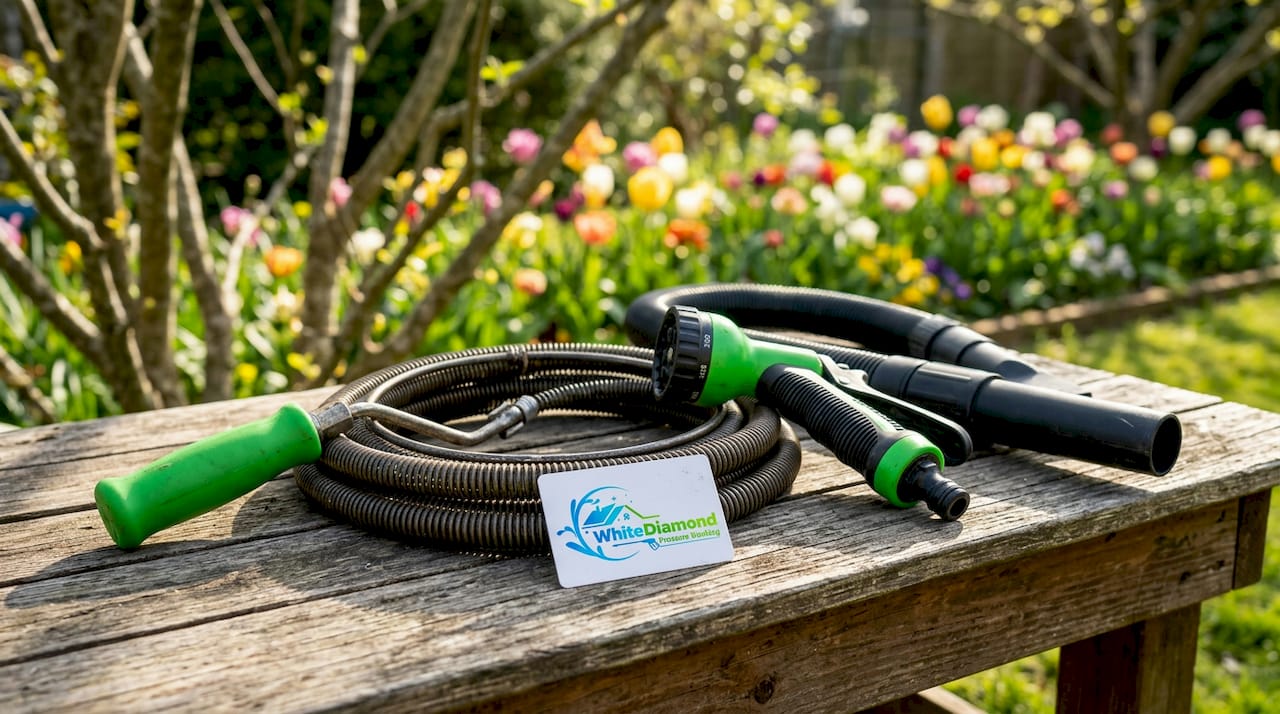
Start every cleaning session by inserting a garden hose fitted with a high-pressure spray nozzle into the top opening of the downspout. Push water downward at full pressure. 90% of typical clogs clear with hose flushing and a mechanical snake, making this the correct first step before reaching for any other tool. If water backs up immediately, you have a blockage within the top elbow or the first vertical section.
Tier 2: Mechanical clearing with a plumber’s snake or auger
When flushing fails, feed a plumber’s snake or hand-cranked drain auger into the downspout from the top. Rotate the cable as you push it down to break apart compacted leaf mats, seed pods, and mud. A 25-foot cable handles most residential downspouts. For two-story homes with longer runs, a 50-foot cable is the better choice.
Tier 3: Wet/dry vacuum extraction
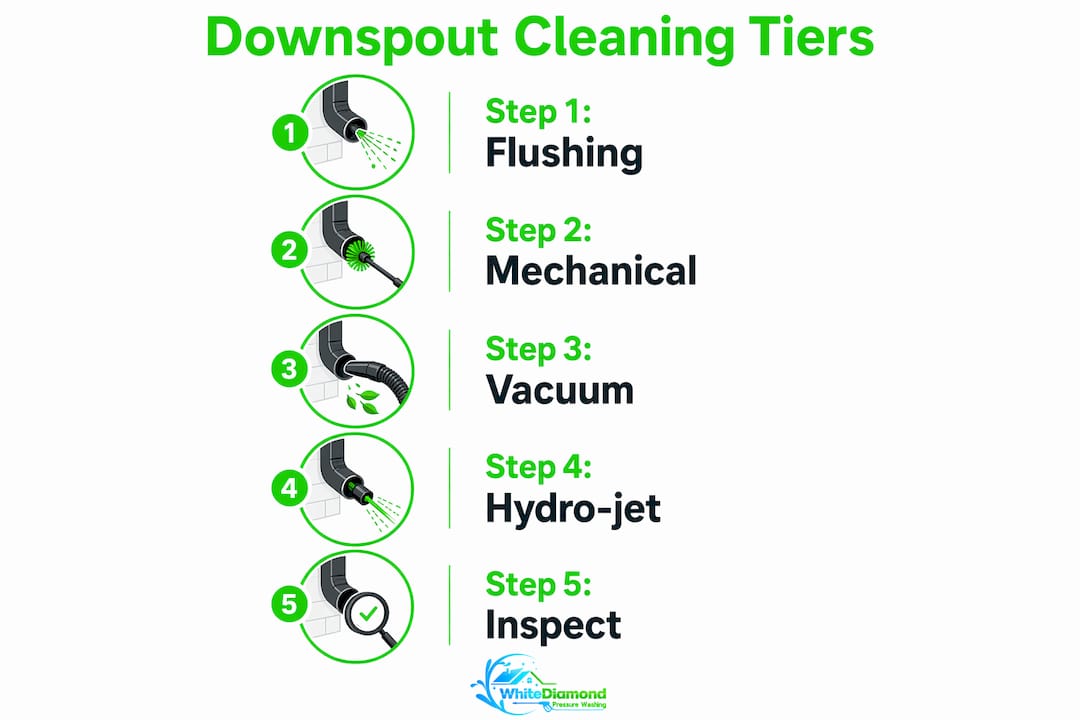
Vacuum extraction from the bottom opening, with a tight seal around the hose, pulls compacted debris downward without pushing it deeper into the pipe. This method works especially well for lower-section clogs and standing water that flushing cannot dislodge. Combine it with a simultaneous top flush for stubborn blockages that resist single-method cleaning.
For underground drain sections, water pressure between 2,000 and 4,000 PSI is required for hydro-jetting, which is well beyond garden hose capacity. Underground clearing is a job for licensed plumbers or specialized exterior cleaning professionals, not a DIY task.
Pro Tip: Remove the bottom elbow extension before flushing. This single step gives you a clear view of the discharge flow and prevents debris from jamming the elbow joint during cleaning.
Why is regular downspout maintenance critical for homeowners?
Clogged downspouts redirect water against your foundation, siding, and landscaping. The connection between blocked downspouts and basement flooding is direct: water that cannot exit through the pipe pools at the base of the wall and saturates the soil, increasing hydrostatic pressure against foundation walls. This is not a slow, gradual problem. A single heavy rain event through a fully blocked downspout can deposit hundreds of gallons of water against your foundation in under an hour.
The recommended cleaning frequency for downspout maintenance mirrors gutter cleaning: twice per year as a baseline, typically in late spring and late fall. Properties surrounded by pine trees, oak trees, or other heavy-shedding species need cleaning three to four times per year because needles and small seeds compact quickly inside vertical pipes.
Signs that your downspout needs immediate attention include:
- Water overflowing from the gutter at the downspout connection point during rain
- Pooling water at the base of the downspout after storms
- Visible plant growth or staining on the exterior of the pipe
- A gurgling or absent flow sound when rain is heavy
- Soil erosion or mulch displacement directly below the discharge outlet
Municipal stormwater guidance frames downspout maintenance as a homeowner responsibility tied directly to local flood prevention infrastructure. When residential downspouts discharge improperly, the excess runoff enters storm drains at volumes they were not designed to handle.
“Proper downspout maintenance is not optional home care. It is the front line of flood prevention for your property and your neighborhood’s drainage system.”
Pair your downspout schedule with your spring exterior checklist to avoid missing critical seasonal windows.
How to diagnose and resolve common downspout blockages
Blockage location determines the correct tool. Treating every clog the same way wastes time and risks pipe damage.
| Blockage location | Symptom | Recommended method |
|---|---|---|
| Top elbow or inlet | Water backs up immediately during flush | Remove elbow, flush directly into vertical pipe |
| Mid-pipe | Water enters but slows or stops partway down | Snake or auger from top, then re-flush |
| Bottom elbow | Water exits slowly or drips | Remove elbow, vacuum from bottom opening |
| Underground extension | No water at discharge outlet despite clear vertical pipe | Professional hydro-jetting or plumber |
The diagnostic process starts with a controlled flush. Run your hose at full pressure into the top of the downspout while a second person watches the discharge outlet at ground level. Lack of water at the outlet during a strong flush indicates a blockage deeper than the vertical pipe, which requires specialized tools beyond standard gutter service scope. This single observation separates a DIY-fixable clog from one that needs professional intervention.
Underground extensions accumulate fine sediment and root intrusion over time, and routine flushing prevents the escalation that leads to full pipe replacement. If you have not flushed your underground extensions in more than two years, schedule a professional inspection before the next heavy rain season.
Discharge direction matters as much as flow volume. Water must exit at least 3 feet from the foundation to prevent soil saturation and basement seepage. Downspout extensions and flexible elbows achieve this at minimal cost.
Pro Tip: Tap the outside of the downspout pipe with your knuckle from top to bottom. A dull thud indicates a packed section. A hollow sound means the pipe is clear. This takes 30 seconds and tells you exactly where to focus your cleaning effort.
Step-by-step guide to safely clean your downspouts
Gather your tools before climbing a single step. You need a garden hose with a high-pressure nozzle, a 25-foot plumber’s snake, a wet/dry vacuum, work gloves, safety glasses, and a bucket for debris. For two-story homes, a gutter cleaning wand that attaches to your hose lets you work from the ground on the gutter trough portion, reducing ladder time significantly.
Follow this sequence for a complete cleaning:
- Clear the gutter trough of leaves and debris by hand or with a gutter scoop, working toward the downspout inlet.
- Remove the bottom elbow extension and set it aside. This opens the discharge end for vacuum access and gives you a clear view of flow.
- Insert the hose into the top of the downspout and flush at full pressure for 30 to 60 seconds. Watch for flow at the bottom opening.
- If flow is weak or absent, feed the snake from the top, rotating as you push. Work it through the blockage, then re-flush.
- If the clog resists the snake, seal the wet/dry vacuum hose to the bottom opening and run it for 30 seconds while a second person flushes from the top.
- Reattach the elbow extension and flush one final time to confirm full, unobstructed flow.
- Check the discharge area for pooling, erosion, or debris accumulation. Redirect the extension if water is landing within 3 feet of the foundation.
For ground-level cleaning on single-story homes, a telescoping hose wand lets you reach the gutter inlet without a ladder. On two-story homes, limit ladder use to the minimum necessary and always have a spotter.
After cleaning, inspect the exterior of the downspout for rust spots, loose brackets, or separated seams. These are signs of wear that cleaning alone will not fix. Add them to your 2026 exterior maintenance checklist for repair before the next rain season.
Key takeaways
Effective downspout cleansing requires a sequential approach combining flushing, mechanical clearing, and vacuum extraction, with discharge verified at least 3 feet from the foundation.
| Point | Details |
|---|---|
| Define the process correctly | Downspout cleansing means clearing debris and verifying full flow to the discharge outlet, not just removing visible blockages. |
| Use a three-tier method | Combine hose flushing, a plumber’s snake, and wet/dry vacuum extraction for clogs that resist single-method cleaning. |
| Clean twice per year minimum | Increase frequency to three or four times annually for properties with heavy tree cover nearby. |
| Diagnose before you act | A controlled flush with a second person watching the outlet tells you whether the blockage is DIY-fixable or underground. |
| Discharge distance protects foundations | Water must exit at least 3 feet from the foundation wall to prevent soil saturation and basement seepage. |
What I’ve learned after years of watching homeowners get this wrong
Most homeowners declare a downspout clean after water comes out the bottom. That is the wrong finish line. Full flow verification means strong, unobstructed flow at the discharge outlet, not a trickle that squeezed past a partial blockage.
The second mistake I see constantly is ignoring the underground section. Homeowners flush the vertical pipe, see water exit, and assume the job is done. But if that underground extension has two inches of compacted sediment, the water is pooling six inches below grade and wicking toward the foundation all winter. You cannot see it. You will feel it when the basement wall starts showing efflorescence or the floor drain backs up.
The third pitfall is single-method thinking. A snake alone pushes debris down. A flush alone pushes debris up. A vacuum alone pulls debris out. The combination of all three, used in sequence, is what actually clears a stubborn clog. I have watched homeowners spend an hour with a snake on a clog that a 30-second vacuum extraction would have solved.
For DIYers, the ground-level methods described above handle 80% of residential downspout problems safely. When the discharge outlet shows no flow after a full flush and snake pass, stop and call a professional. Underground blockages that require hydro-jetting are not a weekend project, and forcing the wrong tool into a buried pipe creates a repair bill far larger than a service call.
Regular maintenance is the only real protection. A twice-yearly cleaning costs almost nothing in time and materials. The foundation repair it prevents can cost tens of thousands of dollars.
— Bobby
Keep your downspouts and exterior in top condition year-round

Downspout cleaning is one part of a larger exterior maintenance system. When gutters, downspouts, siding, and driveways are all maintained together, your property stays protected through every season. Whitediamondpressurewashing serves homeowners and property managers across Citrus County with professional pressure washing and exterior cleaning services designed to protect your investment without damaging surfaces. Whether you need a full exterior wash or targeted help with drainage areas, the team at Whitediamondpressurewashing is ready to help. Explore the full range of exterior cleaning services or request a free estimate today.
FAQ
What is downspout cleansing, exactly?
Downspout cleansing is the removal of debris from vertical downspout pipes combined with a pressurized flush to verify unobstructed water flow from the gutter to the discharge outlet. The process includes mechanical clearing if flushing alone does not resolve the blockage.
How often should downspouts be cleaned?
Clean downspouts at least twice per year, typically in late spring and late fall. Properties with heavy tree cover nearby require three to four cleanings annually to prevent compacted debris from forming.
How do I know if my downspout is clogged?
The clearest sign is water overflowing from the gutter at the downspout connection point during rain. Pooling at the base of the pipe, slow draining, and visible staining on the pipe exterior are also reliable indicators.
When should I call a professional instead of cleaning it myself?
Call a professional when a full hose flush and snake pass produce no water at the discharge outlet. This indicates an underground blockage that requires hydro-jetting at 2,000 to 4,000 PSI, which is beyond DIY equipment capacity.
How far should downspout water discharge from the foundation?
Water should exit at least 3 feet from the foundation wall. Downspout extensions and flexible elbows are the standard solution for redirecting discharge to a safe distance and preventing soil saturation near basement walls.
One thought on “Defining Downspout Cleansing: A Homeowner’s Guide”