

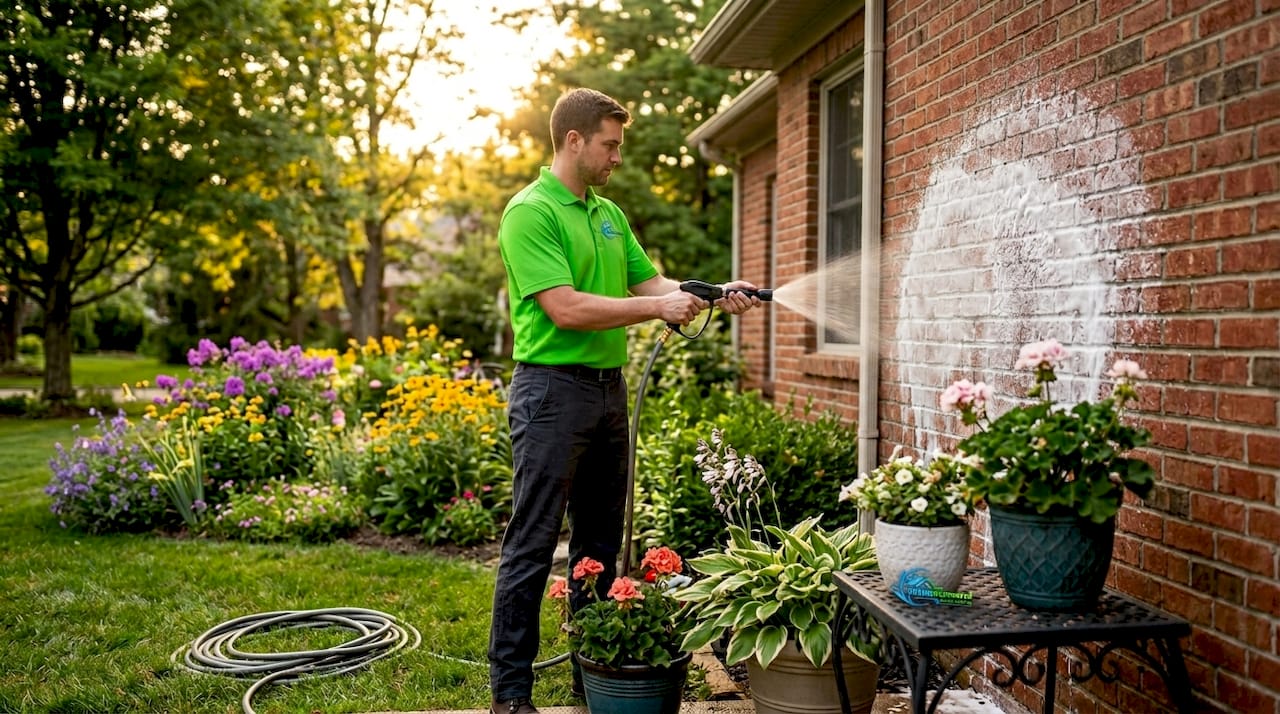
TL;DR:
- Low-pressure detergents use chemistry to remove biological stains at the source, offering results that last longer and prevent surface damage. They rely on surfactants and biocides, such as diluted sodium hypochlorite, applied with proper dwell times and low PSI rinse, making them ideal for delicate surfaces like vinyl, stucco, and painted wood. This method surpasses high-pressure washing by protecting materials, reducing maintenance costs, and ensuring environmentally responsible cleaning.
Low-pressure detergents are the most effective method for removing algae, mildew, and organic stains from delicate exterior surfaces without causing structural damage. The industry term for this approach is soft washing, a technique that pairs water delivered at or below 500 PSI with specialized chemical solutions to clean roofs, vinyl siding, stucco, and painted wood. Homeowners and property managers who rely on high-pressure washing alone risk stripping paint, cracking stucco, and forcing water behind cladding. Understanding why use low-pressure detergents means understanding that chemistry does the work, not force.
What are low-pressure detergents and how do they work?
Low-pressure detergents clean through chemistry rather than mechanical force. Surfactants in the solution reduce water’s surface tension, allowing the liquid to penetrate and lift dirt, grime, and biological growth from pores in the surface material. This is fundamentally different from blasting debris off with high pressure, which only addresses what is visible on the surface.
The active ingredient in most professional soft wash solutions is sodium hypochlorite, typically diluted to 0.5–1.5% for vinyl siding and adjusted upward for concrete or heavily contaminated surfaces. This biocide kills algae, mold, and mildew at the root rather than scraping off the surface layer. The result is a cleaner that lasts, not just a surface that looks clean for a few weeks.
The concept of dwell time separates soft washing from every other cleaning method. Dwell time runs 10 to 20 minutes and must be maintained while the surface stays wet so the chemical reaction completes fully. Letting the solution dry before rinsing causes streaking and incomplete stain removal, which is the most common mistake homeowners make when attempting DIY soft washing.
Here is how the chemistry-to-rinse process works in practice:
- Surfactants penetrate the surface and loosen dirt, grime, and organic matter
- Biocides (typically sodium hypochlorite blends) kill algae, mold, mildew, and lichen at the cellular level
- Dwell period allows the chemistry to work without mechanical agitation
- Low-pressure rinse (under 500 PSI) removes the solution and dead organic matter without damaging the substrate
- Low-sudsing formulas reduce foam buildup, improving rinse quality and protecting equipment seals and pumps
Pro Tip: Apply your soft wash solution starting from the bottom of a surface and working upward. This prevents streaking caused by runoff from the solution hitting dry areas below.
Why choose low-pressure detergents over high-pressure washing?
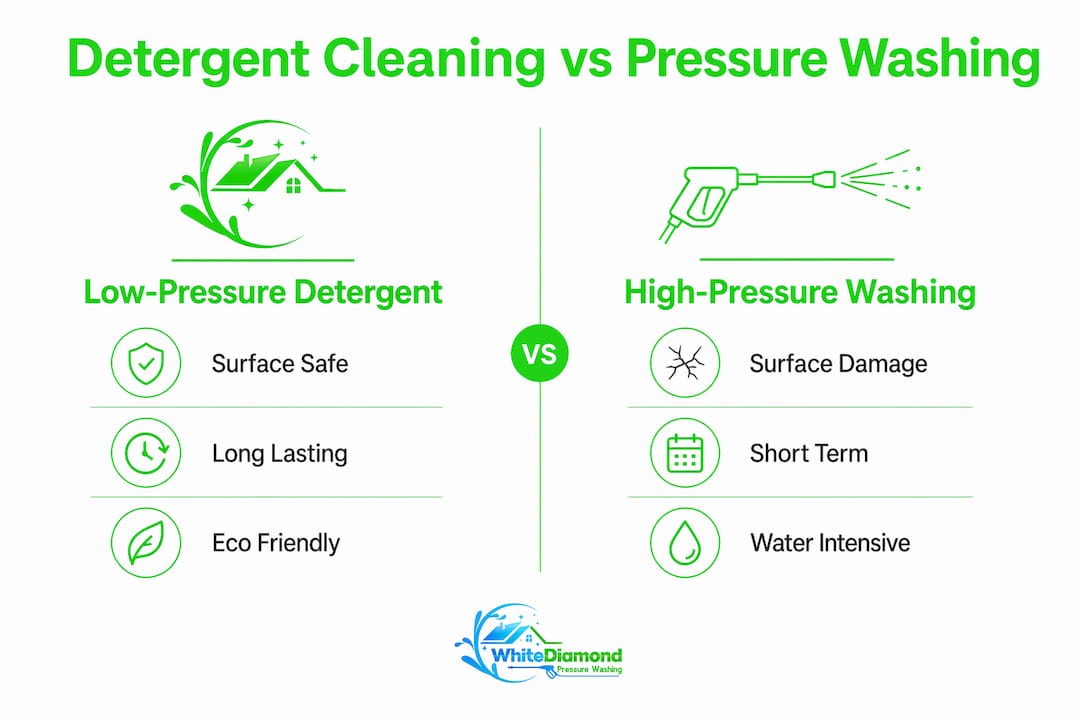
The core advantage of low-pressure detergent cleaning is surface preservation. High pressure forces water behind siding, damages caulk, strips paint, and can crack stucco, all while only removing the surface layer of a stain. Low-pressure methods protect the material while eliminating the biological cause of the stain.
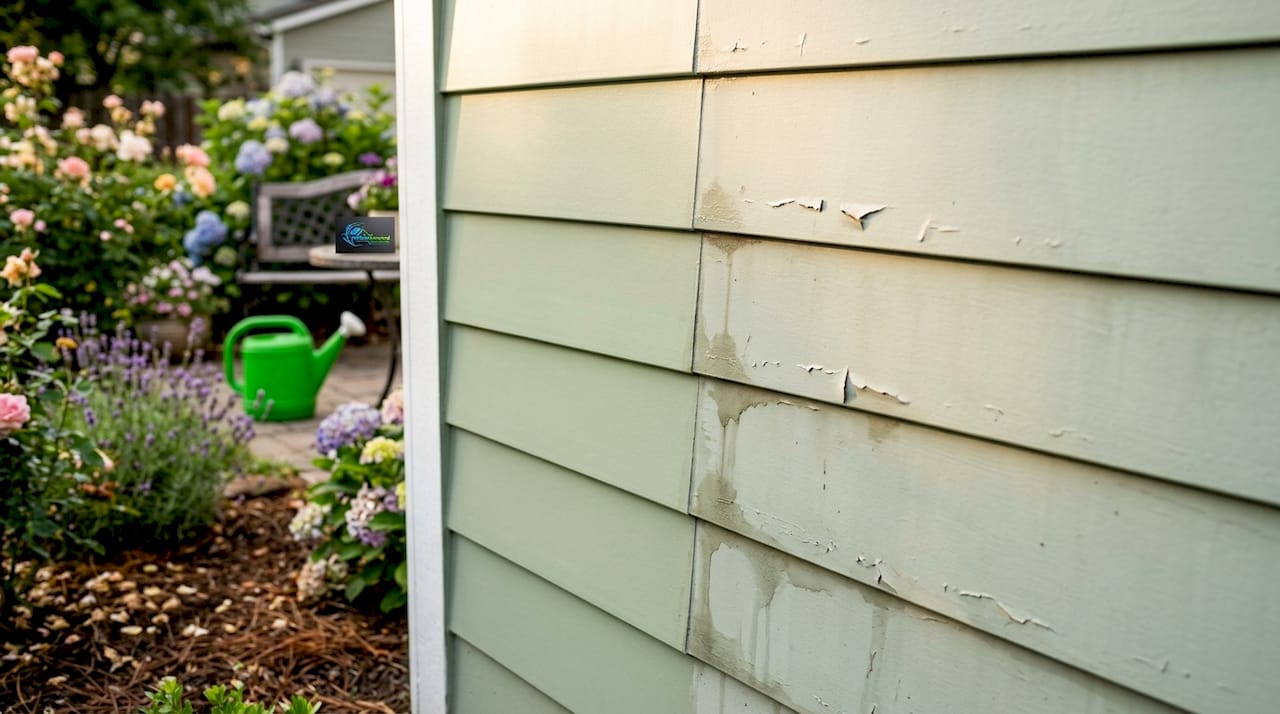
Cleaning longevity is the second major advantage. Soft wash results last 4 to 6 times longer than pressure washing on roofs and siding because the chemical treatment kills the organism, not just its visible presence. A pressure-washed roof may look clean in March and show black streaks again by August. A soft-washed roof treated with a proper biocide blend stays clean for years.
For property managers overseeing multiple units, this longevity translates directly into reduced maintenance frequency and lower annual cleaning costs. Treating a 20-unit complex with soft washing every two to three years costs significantly less than pressure washing every six months.
| Feature | Low-pressure detergent (soft wash) | High-pressure washing |
|---|---|---|
| Operating PSI | Under 500 PSI | 1,500 to 3,000 PSI |
| Cleaning method | Chemical action + biocides | Mechanical force |
| Best surfaces | Vinyl, stucco, shingles, painted wood | Concrete, brick, stone pavers |
| Result longevity | 4 to 6 times longer | Short-term surface clean |
| Damage risk | Very low | Moderate to high on delicate surfaces |
| Water intrusion risk | Minimal | Significant on siding and roofing |
Pro Tip: If your roof has black streaks caused by Gloeocapsa magma algae, only a biocide-based soft wash will eliminate the organism. Pressure washing removes the stain temporarily but leaves the algae colony alive in the substrate.
How to effectively use low-pressure detergents
Applying low-pressure detergents correctly requires attention to four variables: concentration, dwell time, surface type, and weather conditions. Getting any one of these wrong reduces effectiveness and can damage the surface or leave residue.
-
Mix to the correct concentration. Sodium hypochlorite concentration should match the substrate. Use lower dilutions (around 0.5%) on vinyl siding and painted wood, and higher concentrations on concrete or heavily stained roofing. Always check the substrate-specific dilution guidance before mixing.
-
Pre-wet surrounding plants and landscaping. Soft wash chemicals can damage grass, shrubs, and garden beds if applied without protection. Saturate the surrounding area with plain water before applying solution and rinse again immediately after.
-
Apply evenly and maintain wet contact. The surface must stay wet for the full dwell period. On hot days or in direct sunlight, you may need to reapply solution to prevent premature drying. Consistent wet contact is what separates a clean result from a patchy one.
-
Rinse before the solution dries. This is non-negotiable. Rinsing on time prevents streaking, residue buildup, and the need for a second application. Work in manageable sections rather than treating an entire house at once.
-
Use downstream injection for equipment protection. A downstream injector introduces detergent after the pump at low pressure, protecting internal seals from chemical corrosion and extending equipment life significantly.
Pro Tip: Avoid soft washing on days above 90°F or in direct afternoon sun. Heat accelerates drying and shortens your effective dwell window, which forces you to use more chemical to compensate.
Where low-pressure detergents work best and where they fall short
Low-pressure detergents are the right tool for a specific category of surfaces and stains. Knowing those boundaries prevents wasted effort and protects your property from the wrong cleaning method.
The advantages of low-pressure washing apply most directly to these surfaces:
- Asphalt shingles and tile roofs where high pressure causes granule loss and voids manufacturer warranties
- Vinyl siding where pressure washing can crack panels, force water behind the wall, and strip protective coatings
- Stucco and EIFS where mechanical force causes gouging, cracking, and moisture infiltration
- Painted wood including fences, decks, and trim where pressure strips paint and raises wood grain
- Solar panels where abrasive cleaning scratches glass and reduces energy output
Low-pressure detergents are not the right choice for every job. Heavy grease, motor oil, rust stains on concrete, and thick paint buildup require mechanical pressure or hot water to remove. Concrete driveways with embedded tire marks or industrial grime respond better to high-pressure surface cleaning combined with a degreaser than to a soft wash solution alone.
The practical decision rule is straightforward. If the stain is biological (algae, mold, mildew, lichen, moss) or the surface is fragile, use low-pressure detergents. If the stain is mechanical (oil, grease, rust, paint) or the surface is hard and durable, high pressure is the better tool. Many professional cleaning jobs require both methods on different areas of the same property.
Environmental considerations also favor low-pressure detergent use on appropriate surfaces. Lower water volume reduces runoff, and targeted biocide application minimizes chemical waste compared to repeated pressure washing that never fully eliminates the source of regrowth.
Key takeaways
Low-pressure detergents outperform high-pressure washing on delicate surfaces because chemical action kills biological growth at the root, producing results that last 4 to 6 times longer with zero risk of structural damage.
| Point | Details |
|---|---|
| Chemistry beats force | Surfactants and biocides remove stains at the source, not just the surface. |
| Longevity advantage | Soft wash results last 4 to 6 times longer than mechanical pressure washing. |
| Dwell time is critical | Keep surfaces wet for 10 to 20 minutes to complete the chemical reaction fully. |
| Surface matching matters | Use low-pressure detergents on vinyl, shingles, stucco, and painted wood only. |
| Equipment protection | Downstream injection protects pump seals and extends equipment service life. |
What I’ve learned after years of soft washing properties in Citrus County
Most homeowners who call us after a bad DIY experience made the same two mistakes: they used the wrong concentration, and they rinsed too early. Both errors come from treating soft washing like pressure washing with the dial turned down. It is a completely different process, and the chemistry is doing work that takes time.
The detail that surprises people most is the warranty issue. Many asphalt shingle manufacturers, including major brands, explicitly state that pressure washing voids the roof warranty. Soft washing with a biocide solution is the manufacturer-approved cleaning method. That fact alone changes the conversation for property managers who are responsible for maintaining warranty coverage on dozens of roofs.
I have also seen the long-term cost math play out clearly. Properties that commit to regular soft washing on a two to three year cycle spend less on exterior maintenance over a decade than properties that pressure wash annually. The surfaces stay in better condition, paint lasts longer, and caulk does not need replacing as often.
The detergent chemistry itself keeps improving. Newer surfactant blends break down faster after application, reducing environmental impact without sacrificing cleaning power. That is a genuine advancement for homeowners who care about protecting their landscaping and local waterways alongside their home exterior.
— Bobby
Protect your home with professional low-pressure cleaning from Whitediamondpressurewashing

Whitediamondpressurewashing serves homeowners and property managers across Citrus County with professional soft washing and low-pressure detergent cleaning for roofs, siding, driveways, and more. Every job uses industry-approved chemical blends, calibrated downstream injection equipment, and trained operators who know how to match concentration and dwell time to your specific surface. You get results that last years, not weeks, without risking damage to your materials or voiding manufacturer warranties. Visit Whitediamondpressurewashing to get a free estimate, or explore the full breakdown of low-pressure washing benefits to see exactly what this method can do for your property.
FAQ
What is the main reason to use low-pressure detergents?
Low-pressure detergents kill biological growth like algae, mold, and mildew at the root rather than just removing surface stains, which is why soft wash results last 4 to 6 times longer than pressure washing.
Can low-pressure detergents damage my plants or landscaping?
Yes, if applied without protection. Pre-wet all surrounding vegetation with plain water before applying soft wash solution, and rinse the area again immediately after to dilute any chemical runoff.
How long should I leave low-pressure detergent on a surface?
Dwell time is typically 10 to 20 minutes, and the surface must stay wet throughout. Rinsing too early leaves stains behind; letting the solution dry causes streaking.
Is soft washing safe for asphalt shingle roofs?
Soft washing is the manufacturer-approved cleaning method for most asphalt shingles. High-pressure washing causes granule loss and frequently voids roofing warranties, making low-pressure cleaning the only safe option for roof surfaces.
When should I use high pressure instead of low-pressure detergents?
Use high pressure for hard, durable surfaces with mechanical stains such as oil, grease, rust, or paint buildup on concrete or brick. Soft washing vs pressure washing comes down to surface type and stain origin, not personal preference.
Recommended
- Why Low-Pressure Washing is Safer and More Effective – white-diamond-pressure
- Transform Your Home: Benefits of Low-Pressure House Washing – white-diamond-pressure
- Low-pressure roof washing: safe results for your home – white-diamond-pressure
- Role of Detergents in Exterior Cleaning Success – white-diamond-pressure