


Most Citrus County homeowners underestimate the financial impact of neglected gutters, yet foundation repairs often exceed $10,000 when water damage goes unchecked. Your gutters aren’t just metal channels collecting leaves. They’re your home’s primary defense against Florida’s intense rainfall and tropical storms. This guide reveals the hidden costs of gutter neglect, explains how to recognize early warning signs, and provides practical maintenance strategies specifically tailored for Citrus County’s unique climate challenges. You’ll learn exactly how often to clean your gutters, what problems to watch for, and why professional maintenance pays for itself many times over.
Table of Contents
- How Gutter Cleaning Protects Your Citrus County Home From Water Damage
- Common Problems Caused By Clogged Gutters And How To Recognize Them
- Best Gutter Maintenance Practices And Cleaning Frequency For Citrus County Homeowners
- Costs And Benefits Of Regular Gutter Cleaning Versus Neglect For Citrus County Homes
- Protect Your Citrus County Home With Professional Exterior Cleaning
Key takeaways
| Point | Details |
|---|---|
| Water damage prevention | Clean gutters direct rainwater away from your foundation, preventing costly erosion and structural damage. |
| Health and pest risks | Clogged gutters create breeding grounds for mosquitoes, termites, and mold that threaten your family’s health. |
| Florida climate demands | Heavy rainfall and hurricane season require 2-3 annual cleanings, more than most other regions. |
| Financial protection | Regular $250 cleanings prevent $10,000+ foundation repairs and $15,400 average water damage claims. |
| Gutter guards help but don’t eliminate maintenance | Guards reduce cleaning frequency but periodic inspection remains essential for long-term protection. |
How gutter cleaning protects your Citrus County home from water damage
Your gutters perform one critical job: channeling thousands of gallons of rainwater away from your home’s foundation. When they work properly, regular maintenance prevents water damage and foundation problems by keeping water flowing through downspouts and away from your property. When they fail, water pools around your foundation, seeping into soil and creating pressure that leads to cracks, leaks, and structural instability.
The consequences escalate quickly in Citrus County’s wet climate. Neglected gutters lead to foundation erosion as water saturates the ground around your home’s perimeter. Soil expands when wet and contracts when dry, creating a cycle of movement that stresses foundation walls. Cracks appear first as hairline fractures, then widen into gaps that allow water intrusion into basements and crawl spaces. Homeowners who ignore these warning signs face repair bills that regularly exceed $10,000 for foundation work.
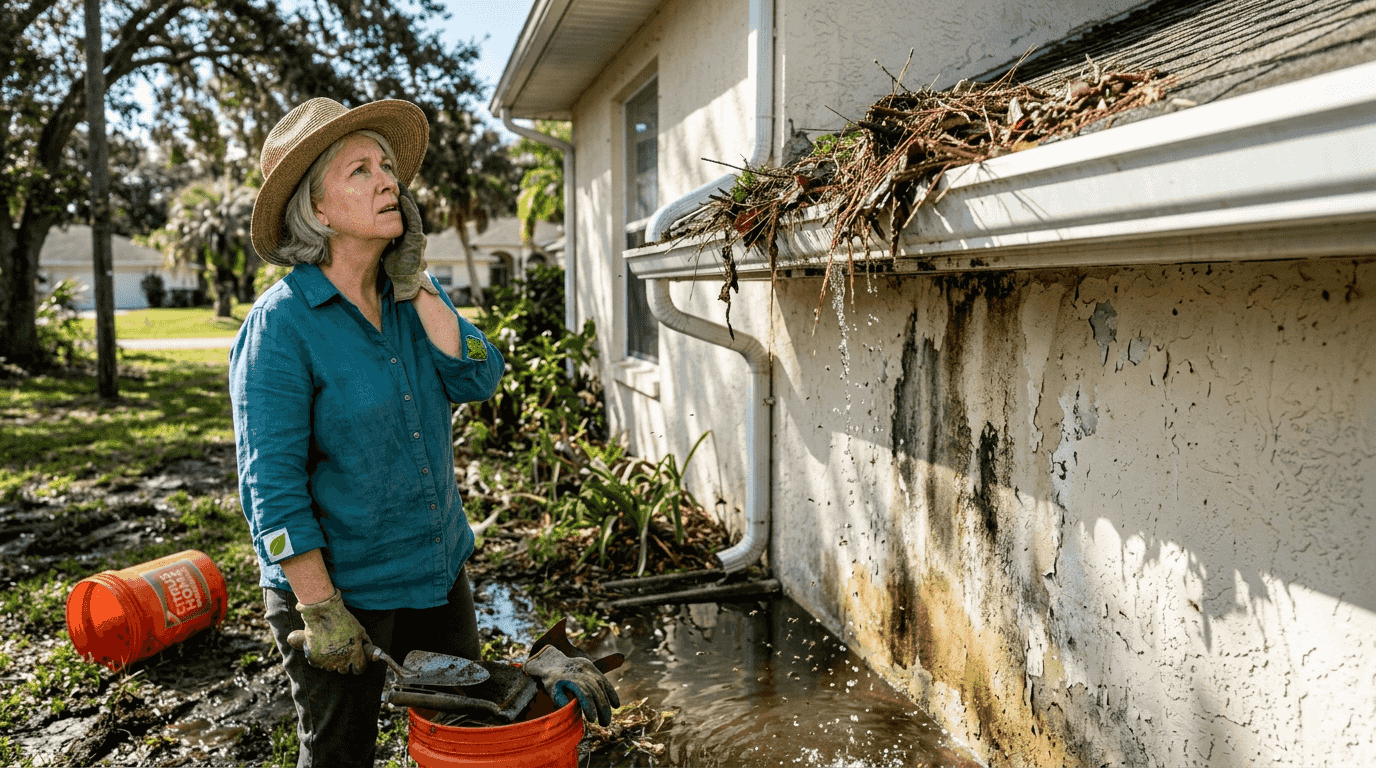
Water damage extends beyond your foundation. Overflowing gutters dump water directly onto fascia boards and soffits, the wooden structures supporting your roofline. These materials absorb moisture, rot develops, and within months you’re looking at compromised roof decking and damaged shingles. Water cascading down your siding creates stains, encourages mold growth, and deteriorates paint and caulking. Your landscaping suffers too, as concentrated water flow erodes soil, damages plants, and creates unsightly trenches around your home’s perimeter.
Pro Tip: Walk around your home during a heavy rainstorm to spot gutter overflow. Water should flow through downspouts, not over gutter edges. This simple inspection reveals problems before they cause expensive damage.
Critical areas affected by clogged gutters:
- Foundation walls and basement waterproofing systems
- Roof decking, shingles, and attic insulation
- Fascia boards, soffits, and exterior trim
- Siding materials and exterior paint finishes
- Landscaping, walkways, and driveway edges
Understanding gutter cleaning water damage prevention strategies helps you protect your investment. The small cost of regular maintenance prevents catastrophic failures that threaten your home’s structural integrity and your family’s safety.
Common problems caused by clogged gutters and how to recognize them
Beyond water damage, clogged gutters create a cascade of problems that impact your home’s health and your family’s wellbeing. Mold and mildew grow in trapped moisture, spreading from gutters into your attic, walls, and living spaces. These fungi release spores that trigger allergies, asthma attacks, and respiratory problems. Black streaks on your siding signal mold colonization, while musty odors in your attic indicate spores have infiltrated your home’s interior.
Stagnant water in clogged gutters becomes a paradise for pests. Mosquitoes, termites, and rodents thrive in standing water, turning your gutters into breeding grounds just feet from your living spaces. Mosquitoes lay eggs in as little as a bottle cap’s worth of water, multiplying rapidly during Florida’s warm months. Termites and carpenter ants detect moisture from remarkable distances, following water trails to feast on your home’s wooden structures. Rodents nest in debris-filled gutters, using downspouts as highways into your attic.
Structural failure represents the most visible consequence of neglect. Sagging gutters result from debris weight and water accumulation, pulling away from fascia boards and creating gaps that accelerate water damage. A single foot of wet leaves and debris can weigh 20 pounds or more. Multiply that across 100 feet of gutters, and you’re adding over a ton of weight your system wasn’t designed to support. Fasteners pull loose, seams separate, and entire sections detach during storms.
Early warning signs to inspect for regularly:
- Water stains on siding below gutter lines
- Visible sagging or separation from roofline
- Plant growth sprouting from gutter channels
- Increased mosquito or flying insect activity near your home
- Soil erosion or trenches forming along your foundation
- Peeling paint or rust spots on gutter exteriors
Pro Tip: Schedule gutter inspections immediately after major storms or hurricanes. High winds and heavy rainfall dislodge debris that can quickly clog downspouts, creating backup problems within hours.
Step-by-step visual inspection process:
- Walk your home’s perimeter looking for water stains, sagging sections, or visible debris
- Check downspouts by running water through them to confirm clear flow
- Examine fascia boards for rot, discoloration, or separation from the roofline
- Inspect foundation areas for soil erosion, standing water, or crack development
- Look for pest activity including nests, droppings, or insect swarms near gutters
Recognizing these problems early gives you time to address issues before they become emergencies. Understanding roof maintenance risks helps you see the connection between gutter health and overall home protection.
Best gutter maintenance practices and cleaning frequency for Citrus County homeowners
Citrus County’s climate demands more frequent gutter maintenance than most regions. Florida homes require inspections and cleaning 2-3 times yearly due to intense rainfall, tropical storms, and abundant vegetation. Your cleaning schedule should align with seasonal patterns: once in spring before summer storms, again in fall after leaf drop, and a third time after hurricane season if your property has significant tree coverage.
Local weather patterns intensify debris accumulation. Hurricane season brings high winds that strip leaves, break branches, and deposit debris across your roof and into gutters. Citrus County’s oak trees, pine trees, and palms constantly shed material year-round, unlike deciduous trees in northern climates that drop leaves once annually. Maintenance frequency adjusts based on local climate and vegetation, meaning properties surrounded by mature trees need quarterly attention while homes in open areas manage with twice-yearly service.
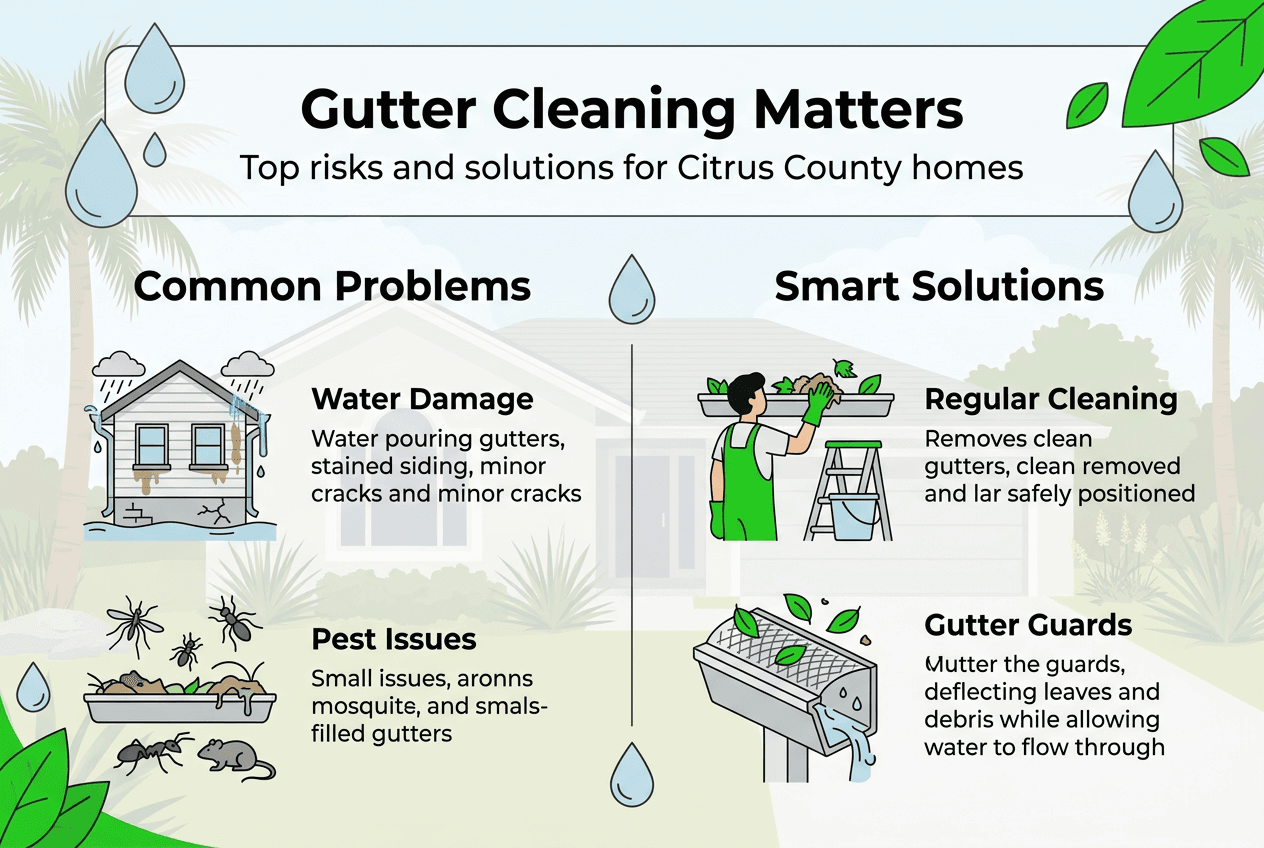
Gutter guards offer significant benefits but come with important limitations. Guards do not eliminate maintenance needs despite marketing claims suggesting otherwise. They reduce debris accumulation by 70-80%, lowering cleaning frequency from three times yearly to once or twice. However, small particles still penetrate most guard systems, and pine needles slip through mesh designs. Guards extend gutter lifespan and reduce cleaning frequency by preventing large debris clogs, but annual inspections remain essential.
| Feature | Without Gutter Guards | With Gutter Guards |
|---|---|---|
| Cleaning frequency | 2-3 times per year | 1-2 times per year |
| Debris accumulation | Heavy leaves, twigs, and organic matter | Fine particles and pine needles |
| Maintenance cost annually | $250-$750 | $150-$400 plus guard investment |
| System lifespan | 15-20 years with regular care | 20-25 years with reduced stress |
| Storm damage risk | Higher from weight and overflow | Lower due to better water flow |
Professional maintenance best practices:
- Remove all debris from gutter channels using proper safety equipment
- Flush downspouts with water to confirm clear drainage paths
- Inspect and tighten all fasteners, brackets, and hangers
- Check for rust, holes, or seam separations requiring repair
- Verify proper pitch ensuring water flows toward downspouts
- Examine splash blocks and extensions directing water away from foundation
Pro Tip: Hire only licensed and insured gutter cleaning professionals. Falls from ladders cause thousands of injuries annually, and proper insurance protects you from liability if accidents occur on your property. Request proof of coverage before any work begins.
Following an annual pressure washing schedule for Citrus County properties helps you coordinate gutter cleaning with other exterior maintenance tasks. Combining services saves time and money while ensuring comprehensive home protection. Understanding gutter cleaning benefits motivates consistent maintenance that prevents the costly problems neglect creates.
Costs and benefits of regular gutter cleaning versus neglect for Citrus County homes
The financial case for regular gutter maintenance becomes crystal clear when you compare service costs against repair expenses. Professional gutter cleaning averages $250 for typical homes, covering debris removal, downspout flushing, and basic inspection. Three annual cleanings total $750, a modest investment that prevents thousands in damage. By contrast, neglected gutters cause foundation damage and water pooling leading to repair bills that dwarf maintenance costs.
Repair expenses escalate rapidly once damage occurs. Foundation crack repair starts at $2,000 for minor fixes but reaches $10,000 to $15,000 for significant structural work requiring excavation and waterproofing. Mold remediation costs $1,500 to $3,500 depending on contamination extent, while pest control and termite treatment add another $500 to $2,000. Interior water damage repairs including drywall replacement, flooring restoration, and paint work easily exceed $5,000 for moderate incidents. These costs stack quickly when multiple systems fail simultaneously.
| Expense Category | Regular Maintenance | Neglect and Repair |
|---|---|---|
| Annual gutter cleaning | $750 (3 services) | $0 initially |
| Foundation repairs | $0 with prevention | $10,000-$15,000 |
| Mold remediation | $0 with prevention | $1,500-$3,500 |
| Pest control and treatment | $0 with prevention | $500-$2,000 |
| Interior water damage | $0 with prevention | $5,000-$8,000 |
| Total 5-year cost | $3,750 | $17,000-$28,500 |
Insurance data reinforces the financial risks of water damage. Water damage accounted for 22.6% of home insurance claims in 2023 with average payouts reaching $15,400 per claim. Many policies exclude damage from neglected maintenance, leaving homeowners fully responsible for repair costs. Even when insurance covers claims, deductibles typically range from $1,000 to $2,500, and filing claims raises premiums for years afterward.
Long-term value preservation benefits:
- Maintained gutters protect your home’s resale value by preventing visible damage
- Clean exterior surfaces and intact foundations attract buyers and support asking prices
- Documented maintenance records demonstrate responsible homeownership to potential purchasers
- Avoided water damage prevents mold disclosures that complicate sales transactions
Pro Tip: Create a home maintenance fund allocating $100 monthly for preventative services including gutter cleaning, pressure washing, and roof inspections. This budget approach transforms large annual expenses into manageable monthly investments while ensuring you never skip critical maintenance.
Regular maintenance isn’t an expense; it’s an investment in your home’s longevity and your financial security. Every dollar spent on prevention saves ten on repairs, making professional gutter care one of the smartest decisions Citrus County homeowners can make.
Exploring exterior cleaning benefits reveals how comprehensive maintenance protects your entire property. Combining gutter cleaning with pressure washing, roof treatment, and other services creates a protective maintenance routine that maximizes your home’s lifespan and minimizes unexpected repair costs.
Protect your Citrus County home with professional exterior cleaning
Your home represents your largest investment, and protecting it requires expertise that goes beyond DIY efforts. Professional maintenance combines specialized equipment, safety protocols, and local knowledge that homeowners simply can’t replicate. White Diamond Pressure Washing brings years of Citrus County experience to every project, understanding exactly how Florida’s climate impacts your property and what maintenance schedules work best for local conditions.

Comprehensive exterior cleaning services address gutter cleaning alongside roof treatment, pressure washing, and soft washing that protect every surface. This integrated approach ensures water flows properly through gutters while roofs remain free of algae and mold that trap moisture. Regular service appointments eliminate the hassle of coordinating multiple contractors while ensuring nothing gets overlooked. Preventative exterior cleaning strategies save money long-term by catching problems early and maintaining systems before failures occur. Schedule your maintenance today and experience the peace of mind that comes from knowing your home receives professional care.
FAQ
How often should homeowners in Citrus County clean their gutters?
Citrus County homeowners should clean gutters 2-3 times annually due to tropical storms, hurricane season, and heavy rainfall patterns. Schedule cleanings in spring before summer storms, fall after leaf drop, and after hurricane season if your property has significant tree coverage. Inspect gutters immediately after major storms or when you notice increased debris from local vegetation, as high winds can quickly clog systems that were recently cleaned.
Can gutter guards completely eliminate the need for cleaning?
No, gutter guards do not eliminate maintenance needs despite reducing debris accumulation significantly. Guards lower cleaning frequency from 2-3 times yearly to 1-2 times by blocking large debris, but small particles and pine needles still penetrate most systems. Annual inspections remain essential to verify proper water flow, check for guard damage, and remove accumulated fine materials that can still cause clogs over time.
What are the risks of neglecting gutter cleaning in Citrus County?
Neglected gutters cause costly foundation damage from water pooling around your home’s perimeter, leading to cracks, leaks, and structural repairs exceeding $10,000. Additional risks include mold growth threatening indoor air quality, pest infestations from standing water, and roof damage from water backup. Water damage represented 22.6% of insurance claims with average payouts of $15,400, and many policies exclude damage from neglected maintenance, leaving homeowners fully liable for repair costs.
What does professional gutter cleaning include?
Professional service includes complete debris removal from gutter channels, downspout flushing to ensure clear drainage, and inspection of fasteners, seams, and pitch. Technicians identify problems like rust spots, holes, or sagging sections requiring repair, and verify splash blocks properly direct water away from your foundation. Quality providers use proper safety equipment, carry liability insurance, and dispose of debris responsibly, eliminating the risks and hassles of DIY cleaning from tall ladders.
How do I know if my gutters need immediate attention?
Watch for water stains on siding below gutter lines, visible sagging or separation from your roofline, and soil erosion or trenches forming along your foundation. Increased mosquito activity near your home, plant growth sprouting from gutter channels, and peeling paint or rust spots on gutter exteriors all signal immediate attention is needed. During rainstorms, water should flow through downspouts rather than overflowing gutter edges, so any overflow indicates clogs requiring prompt cleaning to prevent damage.
Recommended
- Importance of Driveway Cleaning for Citrus County Homes – white-diamond-pressure
- Why Invest in Exterior Cleaning for Citrus County Homes – white-diamond-pressure
- Discover the Top Roof Cleaning Advantages for Homeowners – white-diamond-pressure
- Annual Pressure Washing Schedule: Protecting Citrus County Homes – white-diamond-pressure
- Why roof maintenance matters for Texas homeowners in 2026
- 6 Examples of Drain Maintenance Every Homeowner Needs
One thought on “Why gutter cleaning matters for Citrus County homes 2026”