

TL;DR:
- Routine cleaning with soap, water, and appropriate tools prevents surface deterioration and microbial buildup.
- Focus on high-touch indoor surfaces daily and schedule exterior soft washing every 2 to 3 months in humid climates.
- Use surface-specific methods and EPA-approved disinfectants only when necessary to protect surfaces and maintain property value.
One week your property looks sharp, and the next week mold creeps across the siding and algae stains the driveway. In Citrus County, that cycle happens fast. The combination of high humidity, warm temperatures, and frequent rain creates ideal conditions for biological growth on every exterior surface. Whether you manage a single home or a portfolio of rental properties, staying ahead of surface deterioration protects both your investment and your curb appeal. The steps below draw on CDC and EPA guidance, local best practices, and real-world experience to give you a reliable, repeatable cleaning process.
Table of Contents
- Step 1: Clean first with soap, water, and scrubbing
- Step 2: Target high-touch and exterior surfaces routinely
- Step 3: Match cleaning methods and products to surface type
- Step 4: Sanitize and disinfect only when necessary
- The expert view: What most miss about protecting property value
- Next steps: Transform your property with professional support
- Frequently asked questions
Key Takeaways
| Point | Details |
|---|---|
| Clean first, then disinfect | Mechanical cleaning removes most germs; disinfect only when needed for extra protection. |
| Adapt to surface type | Always choose products and methods that protect the specific surface without causing damage. |
| Routine matters most | Frequent cleaning of high-touch and exterior areas prevents buildup and preserves curb appeal. |
| Prioritize soft wash outdoors | Soft washing is property-safe and effective for Citrus County’s humid climate. |
| Professional help adds value | Expert cleaning pros can prevent costly mistakes and maximize property value. |
Step 1: Clean first with soap, water, and scrubbing
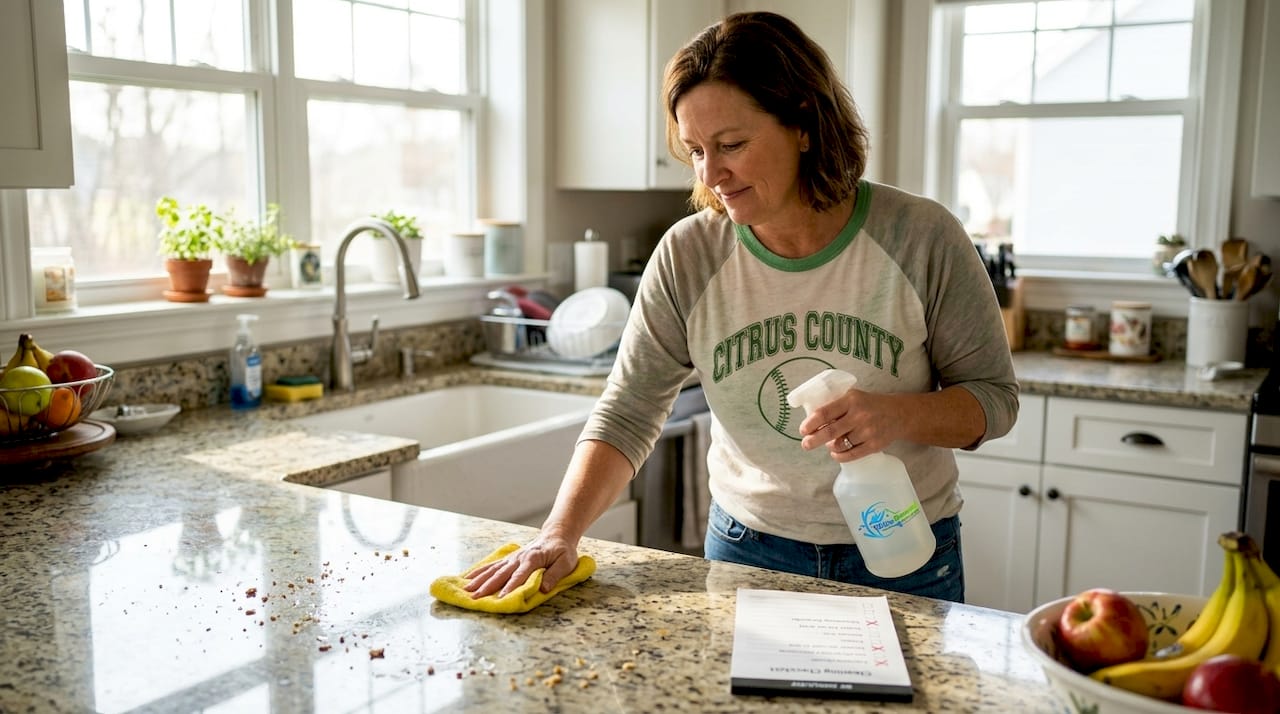
Before you reach for any disinfectant or pressure washer, mechanical cleaning is your first move. Scrubbing with soap and water physically removes dirt, grease, organic matter, and the bulk of microbial contamination from any surface. Cleaning alone removes most viruses and bacteria; disinfecting then kills what remains after that first pass. Skipping this step means your disinfectant or pressure treatment is working against a layer of grime instead of reaching the surface itself.
The science backs this up. Soap and water scrubbing achieves log reductions of 1.9 to 2.7 in microbial load, meaning it eliminates between 99% and 99.5% of contaminants on nonporous surfaces. That is a meaningful result before you apply any chemical product.
Different surfaces call for different tools. Here is a quick breakdown:
- Hard, nonporous surfaces (counters, tile, sealed concrete): Use a stiff-bristle brush or scrub pad with an all-purpose detergent.
- Soft or porous surfaces (wood decking, unglazed brick): Use a softer brush and a pH-neutral cleaner to avoid fiber damage.
- High-touch indoor surfaces (cabinet handles, switch plates, faucets): Microfiber cloths work best because they trap particles rather than spreading them.
- Bathroom tile and grout: A grout brush with a mild alkaline cleaner cuts through soap scum and biological buildup effectively.
For exterior surfaces, the same logic applies. Rinse loose debris first, apply your cleaning solution, let it dwell for two to three minutes, then scrub and rinse. This sequence matters. Rinsing before scrubbing just spreads contamination around.
If you want to understand how this compares to other methods, the traditional cleaning pros and cons are worth reviewing before you decide on a full exterior cleaning plan.
Pro Tip: Switch to microfiber cloths for all indoor surface wiping. Studies consistently show microfiber removes up to 99% of bacteria with water alone, compared to roughly 30% for standard cotton cloths.
Step 2: Target high-touch and exterior surfaces routinely
After learning how basic cleaning works, focus your efforts on the surfaces that impact health and property value most. Not every surface needs the same attention on the same schedule. Prioritizing correctly saves time and prevents the kind of neglect that leads to expensive repairs.
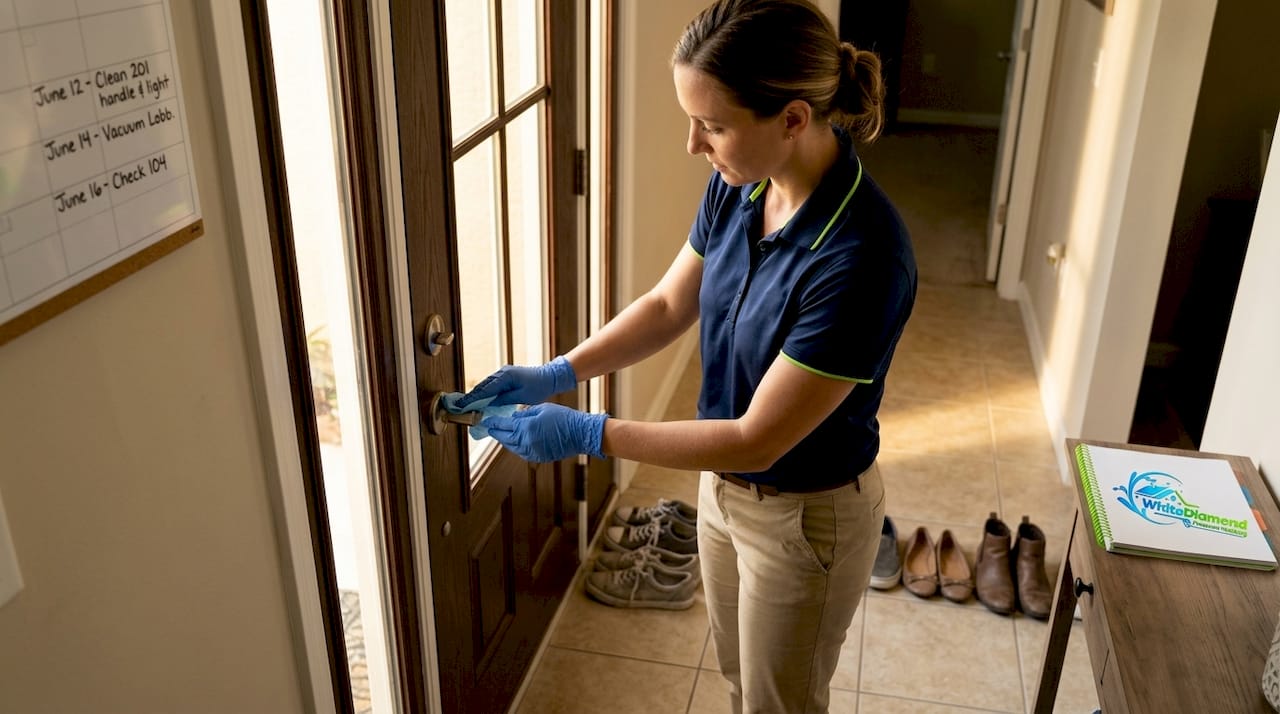
Indoor high-touch surfaces accumulate contamination fastest. These include:
- Door handles and knobs
- Light switches and outlet covers
- Kitchen counters and sink fixtures
- Bathroom faucets and toilet flush handles
- Stair railings and shared entry surfaces
These spots should be wiped down daily in occupied properties, especially rental units with multiple residents.
Exterior surfaces follow a different rhythm. In Citrus County, humidity accelerates mold and algae growth on patios, siding, pool decks, and walkways far faster than in drier climates. A surface that looks clean in March can show visible biological growth by May without any intervention.
Here is a practical schedule for Citrus County property owners:
- Daily: Wipe down indoor high-touch surfaces in occupied spaces.
- Monthly: Rinse and inspect exterior entry points, patios, and pool surrounds.
- Every 2 to 3 months: Soft wash siding, fences, and screened enclosures.
- Annually: Pressure wash concrete driveways, walkways, and pool decks.
Understanding safe exterior cleaning principles helps you protect surfaces while keeping them consistently clean. And if you are weighing your options, the advantages of low-pressure washing are especially relevant for painted or coated surfaces that cannot handle aggressive treatment.
Pro Tip: Mark your exterior cleaning dates on a shared calendar at the start of each year. Scheduling soft washes in February, June, and October aligns well with Citrus County’s seasonal patterns and keeps growth from establishing between sessions.
Step 3: Match cleaning methods and products to surface type
Once you have set your routines, the next decision is choosing the right method for each surface. Using the wrong product or pressure setting is one of the most common and costly mistakes property owners make.
Here is a comparison of common cleaning methods matched to surface types:
| Surface type | Recommended method | Risk level | Notes |
|---|---|---|---|
| Vinyl siding | Soft wash (low PSI + solution) | Low | High pressure strips paint and voids warranties |
| Concrete driveway | Pressure wash (2000-3000 PSI) | Low to medium | Use wide-angle nozzle |
| Wood decking | Soft wash or gentle rinse | Medium | High pressure raises grain and causes splintering |
| Roof shingles | Soft wash only | High if pressurized | Pressure removes granules and voids manufacturer warranty |
| Ceramic tile (exterior) | Pressure wash (1200-1500 PSI) | Low | Avoid grout lines at high pressure |
For chemical selection, use appropriate products per surface type and avoid high pressure on roofs and siding to prevent stripping and warranty voids. The disinfection benchmarks confirm that bleach and isopropyl alcohol (IPA) achieve log reductions above 3.8, far outperforming vinegar or soap alone on smooth nonporous surfaces.
For porous materials like wood and unglazed brick, chemical efficacy drops significantly. This is where mechanical scrubbing and appropriate soft wash solutions do more work than any disinfectant alone.
Key product guidelines:
- Bleach solutions: Effective for concrete, tile, and nonporous siding. Dilute to 1:10 ratio for general use.
- IPA (70%): Best for smooth indoor surfaces and metal fixtures.
- Quaternary ammonium compounds (QAC): Good for general surface sanitizing indoors.
- Vinegar: Low efficacy. Suitable for light mineral deposits, not biological contamination.
- pH-neutral soap: Safe for wood, painted surfaces, and delicate materials.
If you are unsure whether to use soft washing or power washing on a specific surface, the soft vs power washing comparison lays out the differences clearly. For a full process breakdown, the soft washing process guide walks through each stage.
Step 4: Sanitize and disinfect only when necessary
After cleaning, assess whether disinfection is actually needed. Most routine property maintenance does not require it. Disinfection becomes necessary after illness exposure, after a contamination event, or on surfaces that contact food or water regularly.
The CDC is direct on this point: sanitize and disinfect post-cleaning only when needed, using EPA-approved products with proper contact time. Overusing disinfectants contributes to surface degradation and is simply unnecessary for routine curb appeal maintenance.
Here are the steps for proper disinfection when it is warranted:
- Complete mechanical cleaning first. Disinfectants cannot penetrate organic matter.
- Select an EPA-registered disinfectant appropriate for the surface material.
- Apply the product and allow the full contact time listed on the label. Do not wipe early.
- Ventilate the area during and after application.
- Rinse surfaces that contact food, skin, or pets after the contact time.
“Physical scrubbing rivals chemical efficacy on smooth surfaces. The EPA and CDC guidelines emphasize that contact time and safety precautions determine whether a disinfectant actually works as labeled.”
A quick reference for disinfectant performance:
| Product | Log reduction (LR) | Best surface type |
|---|---|---|
| Bleach solution | 3.8 to 5.0 | Nonporous: tile, concrete, sealed counters |
| 70% IPA | 3.8 to 4.5 | Smooth nonporous: metal, glass, laminate |
| QAC products | 2.8 to 3.5 | General indoor surfaces |
| Vinegar (5%) | 1.5 to 2.0 | Light deposits only |
| Soap and water | 1.9 to 2.7 | All surfaces (pre-disinfection step) |
For exterior surfaces, pressure washing safety is just as important as chemical safety. Always wear eye protection and gloves, keep nozzles moving, and never point pressure equipment at windows, vents, or electrical fixtures.
The expert view: What most miss about protecting property value
Here is what most property owners get wrong: they treat cleaning as a reactive task instead of a protective investment. They wait until stains are visible, then reach for the strongest chemical available. That approach costs more and damages surfaces faster.
In Citrus County’s climate, the real driver of property deterioration is biological growth, not dirt. Mold, algae, and mildew establish roots in porous surfaces within weeks of first appearing. Once they are embedded, no amount of scrubbing fully restores the original material. The step-by-step soft wash guide shows how low-pressure treatment with the right solution kills growth at the root without forcing water into gaps or stripping coatings.
For Citrus County properties, soft washing 2 to 3 times per year maintains value in a humid climate without the surface damage that aggressive pressure washing causes. Mechanical cleaning is not just a preliminary step. It is often the most effective intervention available, especially on porous materials where chemicals underperform.
Neglecting routine exterior cleaning does not just affect appearance. It accelerates wood rot, concrete spalling, and paint failure. Those repairs cost thousands. A consistent soft wash schedule costs a fraction of that and keeps your property competitive in any market.
Next steps: Transform your property with professional support
You now have a clear, evidence-based framework for surface cleaning that protects your Citrus County property from the inside out. Putting it into practice consistently is where most property owners need a reliable partner.
White Diamond Pressure Washing brings professional-grade equipment, industry-approved solutions, and deep local knowledge to every job. Whether you need low-pressure washing advantages applied to your siding or a full exterior restoration for an investment property, the team is ready to help. Visit White Diamond Pressure Washing to get your free estimate and book a service that fits your schedule. Protect your investment before the next growth cycle starts.
Frequently asked questions
How often should exterior surfaces be cleaned in Citrus County?
Clean exterior surfaces every 2 to 3 months with soft washing and pressure wash concrete annually to prevent mold and maintain curb appeal in Citrus County’s humid climate.
Is it necessary to disinfect after every cleaning?
No. Disinfect only post-cleaning when someone is ill or there is a risk of contamination, following CDC and EPA guidelines for product selection and contact time.
Can high-pressure washing damage home siding or roofs?
Yes. High pressure strips surfaces and can void manufacturer warranties on roofing and siding materials; always use soft wash for these areas.
What’s the best disinfectant for nonporous surfaces?
Bleach and 70% IPA outperform vinegar and soap with log reductions above 3.8 when applied correctly with proper contact time.
How can property managers ensure cleaning methods are safe and effective?
Always match PSI to surface type, test a small area first, and consult local experts familiar with Citrus County’s climate-specific challenges.
Recommended
- Best practices for property cleaning in Citrus County 2026 – white-diamond-pressure
- Walkway Cleaning: Methods, Benefits & Pro Tips for Citrus County – white-diamond-pressure
- Commercial property cleaning guide for Citrus County 2026 – white-diamond-pressure
- 7 signs your house needs washing in Citrus County – white-diamond-pressure
- Detailed cleaning guide for builders: post-construction success