

TL;DR:
- Commercial canopy cleaning involves professionally removing grease and contaminants from kitchen exhaust systems and outdoor structures to ensure fire safety and hygiene. Proper maintenance includes thorough cleaning of entire ductwork and structural components, with documentation to meet compliance standards, unlike superficial surface wipes. Regular inspections and tailored schedules are essential to prevent fire hazards, structural failures, and preserve warranty coverage.
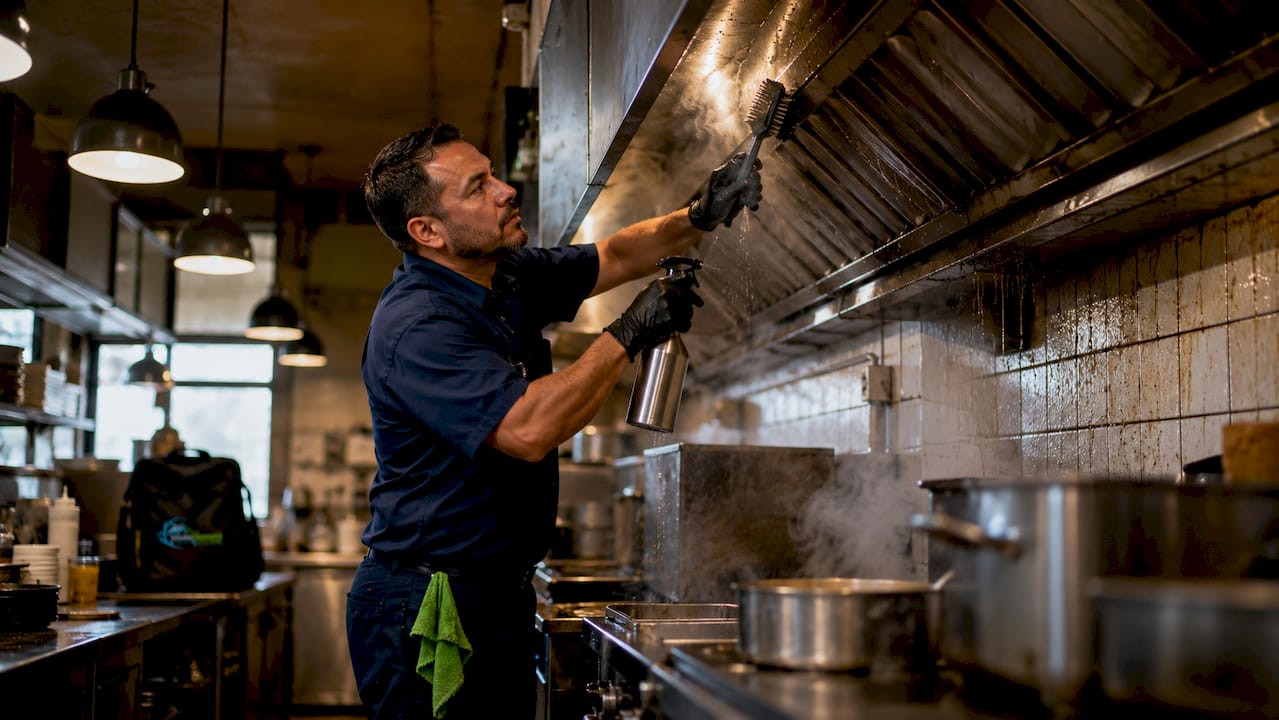
Commercial canopy cleaning is the professional removal of grease, dirt, and contaminants from kitchen exhaust systems and outdoor canopy structures to reduce fire risk, maintain hygiene, and extend equipment lifespan. The term covers two distinct disciplines: kitchen exhaust canopy cleaning and architectural canopy maintenance for outdoor structures. Both fall under the broader category of commercial outdoor cleaning, and both carry real consequences when neglected. This guide breaks down what each process involves, why compliance matters, and how to build a maintenance plan that protects your business.
What is commercial canopy cleaning and what does it cover?
Commercial canopy cleaning is defined as the systematic degreasing and sanitizing of commercial kitchen exhaust hoods, filters, ductwork, and fans, as well as the washing, inspection, and structural upkeep of outdoor architectural canopies. The industry uses the term “canopy cleaning services” to describe both categories, though the methods, tools, and compliance requirements differ significantly between them.
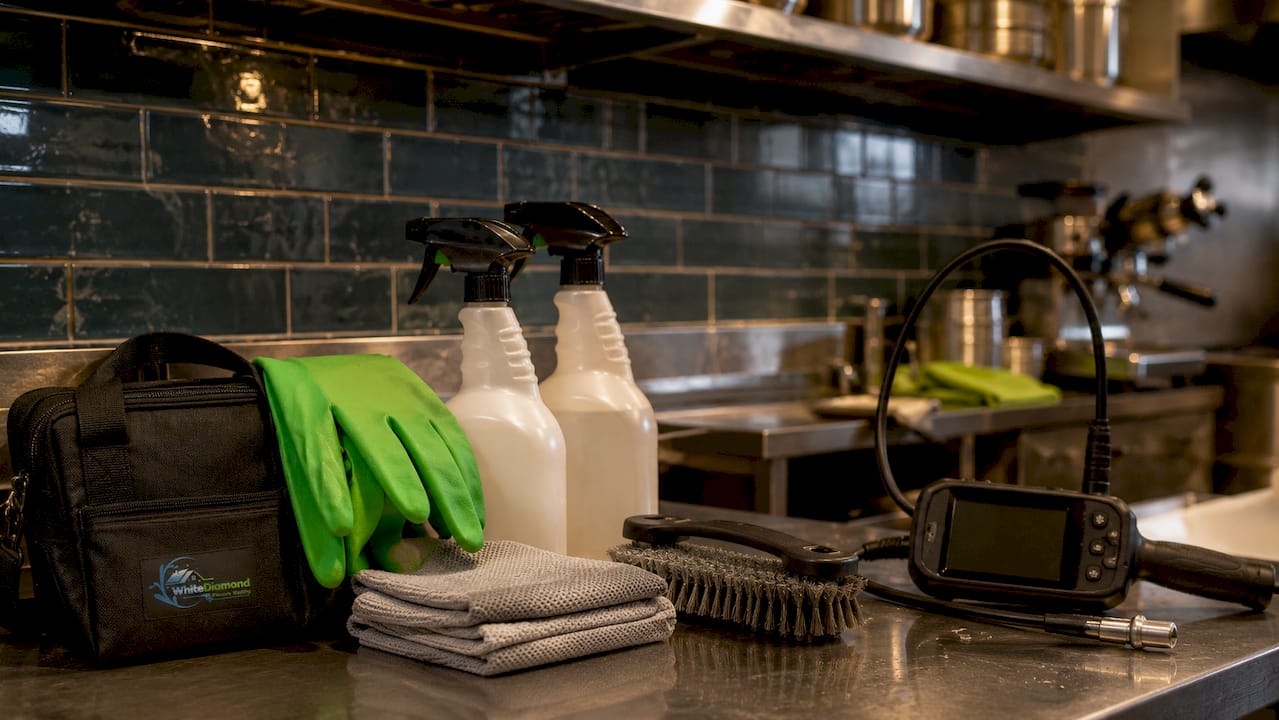
Kitchen canopy cleaning targets the exhaust system above commercial cooking equipment. Professional cleaning uses high-temperature steam and specialized degreasers that penetrate grease layers unreachable by surface cleaning alone. Outdoor canopy maintenance focuses on fabric integrity, drainage, and structural fixings rather than grease removal.
The distinction matters because many business owners assume a quick wipe-down covers their obligations. It does not. Each type of canopy carries its own risk profile, its own cleaning frequency, and its own compliance standard. Treating them as the same task is the first mistake most operators make.
What does commercial kitchen canopy cleaning involve?
Kitchen canopy cleaning is a multi-stage process that goes well beyond wiping down the visible hood surface. A complete service covers the following components in sequence:
- Canopy hood interior and exterior. Technicians degrease all interior surfaces, baffles, and the outer hood shell using alkaline degreasers rated for commercial kitchen use.
- Baffle filters. Filters are removed, soaked, and cleaned separately. Blocked filters restrict airflow and accelerate grease buildup in the ductwork above.
- Internal plenum chambers. The plenum sits between the hood and the duct entry. Grease accumulates in plenum chambers and is a primary ignition point that surface cleaning never reaches.
- Ductwork. Technicians clean the full duct run from hood to exhaust termination. This is the most time-intensive part of the job and the most commonly skipped in DIY attempts.
- Exhaust fans. Fan blades coated in grease lose efficiency and become a direct fire hazard. Cleaning restores airflow and reduces motor strain.
- Compliance documentation. A professional service produces a written report confirming what was cleaned, when, and to what standard. Insurers and health inspectors require this record.
A common misconception is that cleaning the visible hood and swapping filters constitutes a full service. Incomplete cleaning of internal components is one of the leading causes of non-compliance findings during fire safety audits.
Pro Tip: Ask your cleaning provider for a pre-service and post-service photo log of all internal components, including the plenum and duct interior. If they cannot supply one, they are not cleaning those areas.
How is outdoor canopy cleaning different from kitchen cleaning?
Outdoor architectural canopy maintenance addresses a completely different set of risks. The goal is not grease removal. The goal is preserving fabric condition, preventing structural failure, and keeping drainage systems clear.
Key maintenance tasks for outdoor canopies include:
- Fabric washing. Polyester and vinyl canopy fabrics accumulate mold, algae, bird droppings, and airborne pollutants. Cleaning agents must be compatible with the specific fabric type. Incorrect chemicals strip UV coatings and degrade fabric strength, voiding manufacturer warranties.
- Gutter and drainage clearance. Blocked drainage channels cause water pooling, which adds weight load and accelerates fabric rot.
- Fixings and post inspections. Bolts, brackets, and anchor points corrode over time. Structural fixings must be inspected and tightened to prevent failures during storms or heavy rain.
- Ground assessments around posts. Soil movement and water ingress around post bases can compromise the entire structure. This step is frequently overlooked until a post leans or fails.
- Tensioning checks. Loose fabric flaps in wind, creating stress points that tear fabric at seams and attachment points.
Recommended inspection frequency is every three months for most commercial environments, and more often in coastal areas where salt air accelerates corrosion and fabric degradation. Outdoor canopy failure most often results from neglecting post stability, tensioning, and drainage rather than from dirty fabric alone.
Pro Tip: Schedule outdoor canopy inspections to coincide with seasonal weather changes. A pre-summer check catches tensioning issues before high winds arrive, and a post-winter check identifies any corrosion or drainage blockages caused by leaf accumulation.
Why is canopy cleaning critical for safety and compliance?
The safety case for regular canopy cleaning is direct and well-documented. Grease buildup is the primary cause of approximately 61% of commercial kitchen fires in Australia. Grease acts as continuous fuel along the entire exhaust path, allowing a small cooking flare-up to spread rapidly into ceilings and roof spaces.
Grease-related kitchen fires are not accidents caused by cooking. They are maintenance failures. A clean exhaust system removes the fuel source before a fire has anything to travel through.
Compliance requirements reinforce this point. Standards such as AS 1851-2012 and TR19 specify regulated cleaning intervals and require formal documentation. Compliance documentation is not optional paperwork. Lack of it can void your insurance coverage after a fire incident linked to grease accumulation. That means a single missed cleaning cycle could leave your business fully liable for fire damage that an insurer would otherwise cover.
Beyond fire risk, poor canopy hygiene creates secondary problems. Grease-coated surfaces attract pests. Mold growth in poorly maintained outdoor canopies poses health risks for customers and staff. Food safety codes in most jurisdictions treat canopy cleanliness as a direct hygiene requirement, not a separate maintenance category.
For outdoor structures, the compliance angle shifts to structural safety. A canopy that fails during a storm injures people and exposes the property owner to significant liability. Regular professional inspection is the only way to document that a structure was maintained to a reasonable standard.
What are the best practices for scheduling canopy maintenance?
Effective canopy maintenance starts with a schedule built around your specific operation, not a generic calendar. Cleaning frequency should be tailored to kitchen traffic volume and canopy usage, since high-volume kitchens require more frequent service to stay safe and compliant.
Kitchen canopy cleaning frequency
| Kitchen type | Recommended cleaning interval |
|---|---|
| High-volume (fast food, hotel kitchens) | Every 1–3 months |
| Medium-volume (casual dining, cafes) | Every 3–6 months |
| Low-volume (offices, light catering) | Every 6–12 months |
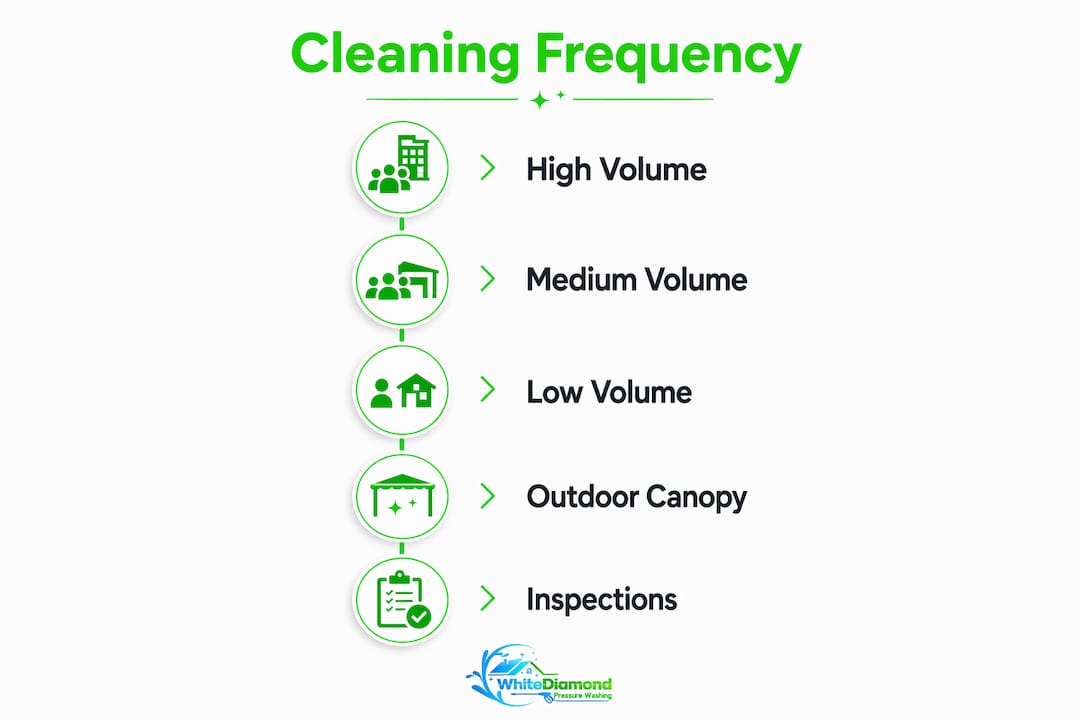
These intervals are starting points. A kitchen that switches to higher-fat cooking or increases service hours mid-year needs to reassess its schedule immediately.
Outdoor canopy maintenance schedule
- Inspect every three months as a baseline
- Increase to monthly in coastal or high-pollution environments
- Clean fabric surfaces at least twice per year, or after any severe weather event
- Replace or re-tension fabric at the first sign of sagging or seam stress
Professional service vs. DIY
Professional cleaning beats DIY by a significant margin. Professional services achieve 81% higher satisfaction and reduce property damage risks substantially. DIY attempts consistently miss internal duct sections, use incompatible cleaning agents, and produce no compliance documentation. For a commercial property, the absence of documentation alone is enough to create a serious insurance and liability problem.
When selecting a canopy cleaning provider, verify that they supply written compliance reports, carry appropriate insurance, and can demonstrate familiarity with the specific materials in your canopy system. Checking materials compatibility before any cleaning agent is applied is a non-negotiable step that separates professional providers from cut-rate operators.
Key Takeaways
Commercial canopy cleaning requires separate approaches for kitchen exhaust systems and outdoor architectural structures, with compliance documentation being as critical as the physical cleaning itself.
| Point | Details |
|---|---|
| Two distinct disciplines | Kitchen exhaust cleaning and outdoor canopy maintenance require different tools, agents, and compliance standards. |
| Full scope matters | Kitchen cleaning must cover plenum chambers, ductwork, and exhaust fans, not just visible hood surfaces. |
| Fire risk is primary | Grease buildup causes the majority of commercial kitchen fires, making regular cleaning a direct safety obligation. |
| Documentation protects you | Compliance records under standards like AS 1851-2012 and TR19 are required to maintain valid insurance coverage. |
| Schedule by usage | High-volume kitchens need cleaning every 1–3 months; outdoor canopies need inspection every 3 months at minimum. |
What I’ve learned from watching businesses skip the full scope
Bobby here. After years in exterior cleaning, the pattern I see most often is not outright neglect. It is partial maintenance that creates a false sense of security. A business owner gets the visible hood wiped down, ticks a box, and assumes the job is done. The ductwork above has not been touched in two years.
The second mistake I see regularly is using the wrong cleaning agent on outdoor canopy fabric. Owners buy a strong degreaser because it works on concrete, then apply it to a vinyl canopy. The fabric looks clean for about six months. Then the UV coating is gone, the color fades unevenly, and the warranty is void. The cost of replacing that fabric far exceeds what a compatible fabric cleaner would have cost over five years of proper maintenance.
The businesses that manage canopy upkeep well share one habit: they treat it as a documented, scheduled process rather than a reactive task. They have a service provider who supplies written reports, and they keep those reports on file. When an insurer or health inspector asks for records, the answer is ready. That readiness is not just administrative tidiness. It is the difference between a covered claim and a six-figure out-of-pocket loss.
If you take one thing from this article, make it this: the importance of canopy cleaning is not about appearances. It is about removing the conditions that allow fires to start and structures to fail.
— Bobby
Professional canopy cleaning services for your commercial property
Keeping your canopy systems clean and compliant is not a task you want to leave to guesswork. Whitediamondpressurewashing provides professional exterior cleaning services for commercial properties in Citrus County and surrounding regions, covering both structural surface cleaning and detailed maintenance programs built around your operation’s specific needs.

Whether you manage a restaurant kitchen, a retail property with outdoor shade structures, or a multi-use commercial facility, Whitediamondpressurewashing delivers service with documented results, flexible scheduling, and cleaning methods matched to your materials. Visit Whitediamondpressurewashing to request a free estimate and get a maintenance plan that keeps your property safe, compliant, and looking its best year-round.
FAQ
What is commercial canopy cleaning in simple terms?
Commercial canopy cleaning is the professional removal of grease, dirt, and contaminants from kitchen exhaust systems and outdoor canopy structures. It covers both fire safety maintenance for kitchen hoods and structural upkeep for architectural shade canopies.
How often should a commercial kitchen canopy be cleaned?
High-volume kitchens require cleaning every 1–3 months, medium-volume operations every 3–6 months, and low-volume kitchens every 6–12 months. Frequency should increase if cooking volume or menu type changes.
Does canopy cleaning affect my business insurance?
Yes. Standards like AS 1851-2012 and TR19 require documented cleaning at regulated intervals. Missing documentation can void your insurance coverage after a fire incident linked to grease accumulation.
Can I clean a commercial canopy myself?
DIY cleaning consistently misses internal duct sections and produces no compliance documentation. Professional services achieve 81% higher satisfaction and significantly reduce property damage risk compared to self-managed cleaning.
How do I know if a cleaning agent is safe for my outdoor canopy fabric?
Check compatibility with your specific material, whether polyester or vinyl, before applying any product. Incorrect chemicals strip UV coatings and degrade fabric strength, affecting both durability and manufacturer warranty coverage.
Recommended
- Commercial property cleaning guide for Citrus County 2026 – white-diamond-pressure
- Commercial Driveway Cleaning: Impact on Property Value – white-diamond-pressure
- Commercial Cleaning Advantages That Protect Your Bottom Line – white-diamond-pressure
- Commercial Property Exterior Maintenance: Impact on Value – white-diamond-pressure