

TL;DR:
- Regular soft washing protects surfaces and reduces long-term energy costs in humid Citrus County.
- Eco-friendly solutions and low-pressure methods use significantly less water and energy.
- Consistent maintenance prevents costly damage and enhances property’s energy efficiency and curb appeal.
Citrus County homeowners face a triple challenge every year: relentless humidity that feeds algae and mold, exterior surfaces that take a beating from Florida’s wet season, and water restrictions that limit how and when you can clean. Ignoring your home’s exterior isn’t just a curb appeal problem. Dirty roofs, grimy siding, and clogged gutters quietly drive up your energy bills and shorten the life of your materials. The good news is that the most effective cleaning methods for this region also happen to be the most energy and water efficient. Here’s what you need to know to clean smarter in Citrus County.
Table of Contents
- Understand surface needs and Citrus County regulations
- Choose energy-saving cleaning methods: Soft washing vs. pressure washing
- Use eco-friendly solutions and tools for maximum energy and water savings
- Smart maintenance habits to keep your home cleaner for longer
- Why making small changes in your cleaning routine pays off in Citrus County
- Make energy-smart exterior cleaning easier with expert help
- Frequently asked questions
Key Takeaways
| Point | Details |
|---|---|
| Soft washing is energy-smart | Soft washing uses lower pressure, less water, and extends the life of home exteriors compared to traditional pressure washing. |
| Eco-friendly cleaners work | Simple mixes like vinegar and water clean effectively, save energy, and comply with Citrus County regulations. |
| Plan by season and surface | Adapting your cleaning schedule to local humidity, surface type, and ordinances maximizes efficiency and results. |
| Routine maintenance saves money | Consistent exterior upkeep prevents expensive repairs and boosts overall home energy performance. |
Understand surface needs and Citrus County regulations
Before you grab a hose or hire anyone, it helps to know what your exterior surfaces actually need and what local rules apply to your cleaning schedule.
Different materials respond very differently to cleaning. Vinyl siding, stucco, wood, and asphalt shingles all have distinct tolerances for pressure, moisture, and chemical exposure. Vinyl and painted wood can warp or peel under high pressure. Stucco is porous and soaks up mold-feeding moisture if not cleaned regularly. Asphalt shingles lose their protective granules when blasted with high-pressure water. Knowing your surface type is the first step toward choosing a method that cleans without causing damage.
Florida’s humidity is the real accelerant here. Shade from trees, overhangs, or neighboring structures keeps surfaces damp longer, which is exactly the condition algae and mold need to thrive. North-facing walls and areas near water features are especially prone to rapid regrowth. These spots often need attention more frequently than the rest of your home.
Citrus County also has water use rules that affect exterior cleaning. Phase II water restrictions typically limit exterior washing to once per year, which makes every cleaning session count. You want to get maximum results from each wash, which means timing and method matter as much as frequency.
As a general guideline, clean exteriors every 6-12 months; shaded or waterfront areas benefit from cleaning every 3-6 months due to faster algae and mold accumulation.
Here’s a quick look at which surfaces need the most attention in Citrus County:
- Asphalt shingle roofs: Algae streaks appear fast in humid climates; soft washing is the only safe option
- Stucco walls: Porous surface traps moisture and mold; needs gentle, low-pressure cleaning
- Vinyl siding: Prone to mildew in shaded spots; responds well to eco-friendly solutions
- Wood decks and fences: Require careful pressure control to avoid splintering or grain damage
- Driveways and walkways: Accumulate grime and algae; can handle moderate pressure with the right technique
Use the county cleaning prep checklist to organize your tasks before the wet season hits. Reviewing exterior surfaces to clean can also help you prioritize.
Pro Tip: Bundle all your exterior cleaning tasks into one session in early spring. You remove winter pollen before it gets sealed in by summer rain, you comply with annual water restrictions in one shot, and you protect surfaces heading into the most damaging season of the year.
Choose energy-saving cleaning methods: Soft washing vs. pressure washing
Now that you understand local constraints and your home’s needs, let’s look at how your cleaning method choice impacts both energy consumption and surface longevity.
Pressure washing uses high-force water, often 1,500 to 4,000 PSI (pounds per square inch), to blast away dirt. It works fast on concrete, but it can force water under siding, strip paint, crack stucco, and damage roof granules. It also uses a significant amount of water per session. On delicate surfaces, the damage it causes can cost far more to repair than the cleaning saved.
Soft washing is different. It uses less than 500 PSI and up to 80% less water than pressure washing, and it relies on biodegradable cleaning solutions to do the heavy lifting. The results also last longer, typically 2 to 5 years versus 6 to 12 months for pressure washing alone. That means fewer sessions, less water use, and lower long-term costs.
In humid Florida, professionals use soft washing for the vast majority of residential exteriors precisely because it cleans without the collateral damage.
| Feature | Soft washing | Pressure washing |
|---|---|---|
| PSI range | Under 500 | 1,500 to 4,000 |
| Water usage | Up to 80% less | High |
| Result longevity | 2 to 5 years | 6 to 12 months |
| Surface damage risk | Very low | Moderate to high |
| Best for | Roofs, siding, stucco, wood | Concrete, pavers |
Learn more about the advantages of low-pressure washing and review practical soft washing tips to see how it applies to your specific surfaces.
High-pressure washing risks water infiltration under siding, voided manufacturer warranties, and plant damage from chemical runoff. For most Citrus County exteriors, soft washing is the safer and more energy-efficient choice.
The eco-friendly exterior cleaning approach pairs perfectly with soft washing because low pressure means the cleaning solution does the work, not brute force.
Use eco-friendly solutions and tools for maximum energy and water savings
With the right cleaning approach in mind, the next step is choosing products and tools that multiply your energy and water savings.
Harsh chemicals like TSP (trisodium phosphate) and phosphate-based cleaners are hard on your landscaping, can run off into local waterways, and often require hot water to activate, which adds to your energy use. Eco-friendly alternatives clean just as effectively for most residential surfaces without those downsides.
Here are the best DIY eco-friendly solutions for Citrus County exteriors:
- White vinegar mix: Combine one part white vinegar with three parts water for vinyl siding and painted surfaces. It cuts through mildew without damaging the finish.
- Baking soda paste: Mix baking soda with a small amount of water for spot-treating stubborn stains on concrete or brick.
- Dr. Bronner’s Sal Suds: A few drops in a bucket of cold water creates a powerful, biodegradable cleaning solution for most exterior surfaces.
- Cold water rinse: Always rinse with cold water. Hot water increases energy use and can cause some surfaces to expand and crack.
The right tools matter just as much as the solution. Here’s how common tools compare for water and energy efficiency:
| Tool | Water savings | Energy savings | Best use |
|---|---|---|---|
| Shut-off trigger hose | High | Moderate | General rinsing |
| Foam cannon | High | High | Applying solutions evenly |
| Soft-bristle brush | Very high | Very high | Scrubbing without a machine |
| Microfiber cloth | Very high | Very high | Spot cleaning and detail work |
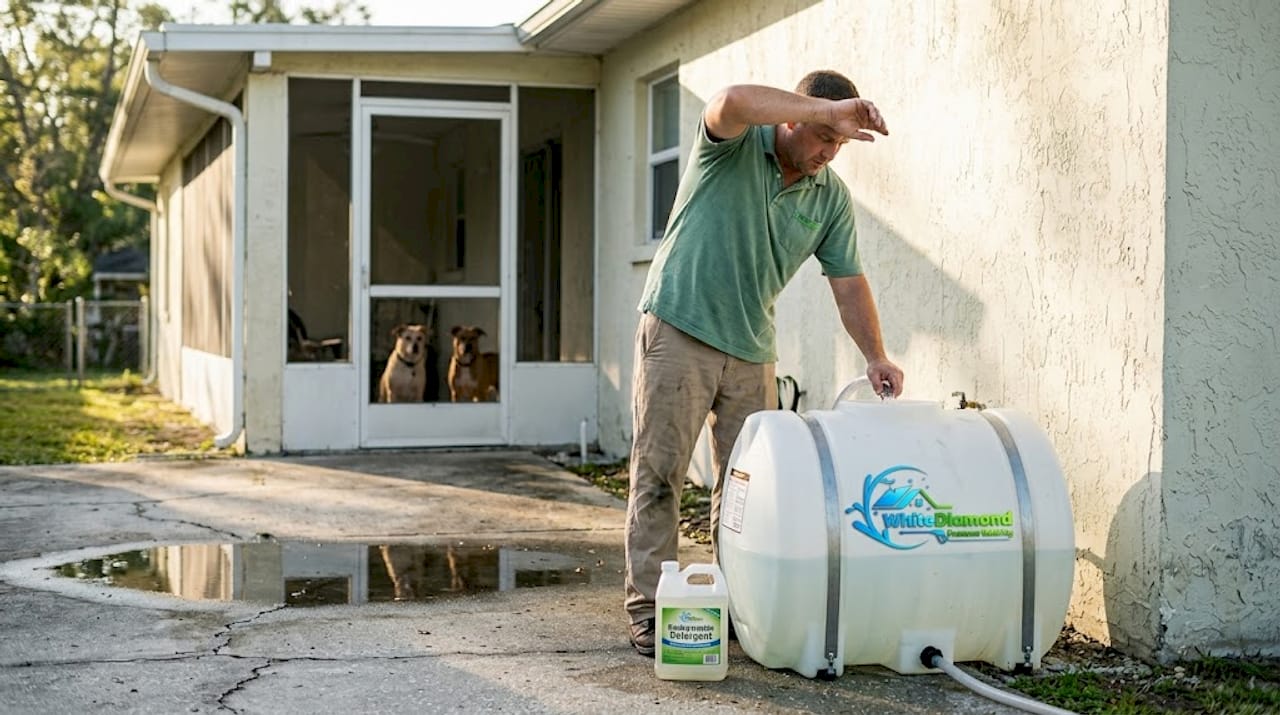
For exterior cleaning detergents, look for biodegradable formulas designed for low-pressure application. Understanding the types of exterior cleaning helps you match the right product to each surface.
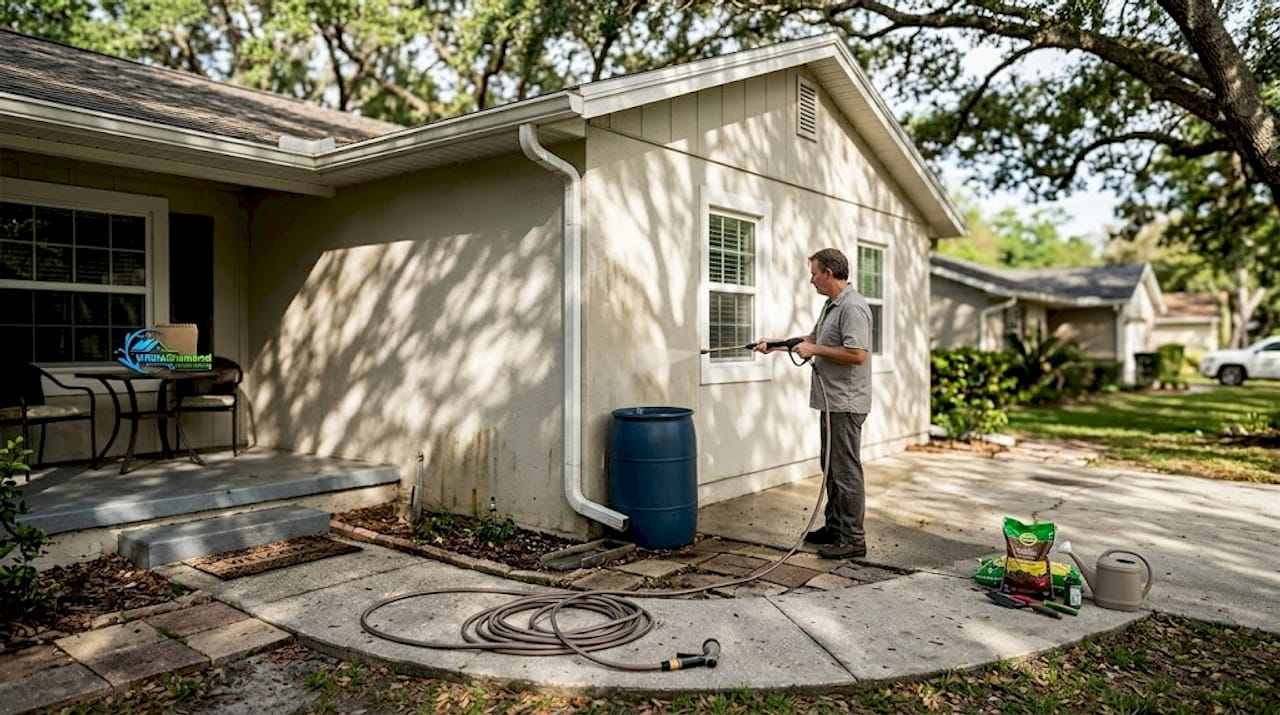
Pro Tip: Install a rain barrel to collect water from your downspouts. Use that stored rainwater for rinsing exterior surfaces. It’s free, it’s soft water that won’t leave mineral deposits, and it doesn’t count against your restricted water allocation.
Smart maintenance habits to keep your home cleaner for longer
Eco-friendly products help with day-to-day cleaning, but your ongoing habits make the biggest difference over the long run.
The goal is to extend the time between full cleaning sessions, which saves water, energy, and money. Small, consistent actions prevent the kind of buildup that requires aggressive cleaning later. Think of it like brushing your teeth versus waiting for a dental problem to develop.
Here are the upkeep tasks that make the biggest difference:
- Sweep debris off your roof and gutters after storms to prevent moisture trapping and algae growth
- Trim back trees and shrubs that cast shade on your siding or roof, reducing the damp conditions mold needs
- Clear gutters every season to prevent overflow that stains siding and damages fascia boards
- Inspect your roof twice a year for early algae streaks, which are far easier to treat when caught early
- Clean AC filters and vents regularly since dirty filters use 5-15% more energy for cooling
- Dust refrigerator coils to reduce the load on your cooling system, which connects to whole-home energy efficiency
Mold and algae on your roof don’t just look bad. They degrade shingles and reduce the roof’s ability to reflect heat, which forces your AC to work harder. The benefits of exterior cleaning go well beyond appearance when you factor in insulation and cooling performance.
Preventing mold before it spreads is much cheaper than treating it after the fact. Learn how to prevent exterior mold with targeted soft washing and routine upkeep. For roofs specifically, the benefits of soft wash roof cleaning show why this is one of the highest-return maintenance tasks you can do.
Pro Tip: Schedule your spring cleaning before May. Removing pollen and organic debris before the wet season prevents it from being baked onto surfaces by summer heat, which makes removal much harder and more water-intensive later.
For additional DIY energy savers, the Department of Energy offers a solid list of low-effort projects that compound well with a clean exterior.
Why making small changes in your cleaning routine pays off in Citrus County
Stepping back, there’s one lesson that stands out from homeowners and pros alike: most people dramatically underestimate how much gradual buildup costs them.
A little algae on the roof seems harmless. A bit of grime on the siding looks like a cosmetic issue. But in Citrus County’s climate, those small problems compound fast. Roof stains reduce heat reflectivity, which means your AC runs longer and harder. Mold on siding can work its way into wall cavities, degrading insulation. Clogged gutters cause water to pool near your foundation.
The indirect energy benefits of a clean exterior, including better roof reflectivity and preserved insulation, add up meaningfully over a Florida summer. None of these savings come from one dramatic cleaning session. They come from consistent, low-energy maintenance that keeps problems from forming in the first place.
The value of exterior cleaning is really the value of compounding small actions. Routine beats intensity every time in this climate.
Make energy-smart exterior cleaning easier with expert help
If you want to maximize your energy and water savings without the trial and error, turn to trusted Citrus County professionals.
White Diamond Pressure Washing specializes in eco-friendly, low-pressure cleaning methods designed specifically for Florida’s demanding climate. From roofs to driveways, every service uses techniques that protect your surfaces, respect local water rules, and reduce the need for repeat visits.

Understanding the soft washing process shows you exactly what professional cleaning looks like and why it outperforms DIY methods for most surfaces. The professional exterior cleaning benefits go beyond clean surfaces, covering energy savings, property value, and long-term material preservation. Ready to simplify your maintenance routine? Visit White Diamond Pressure Washing to get a free estimate and schedule a session before the wet season hits.
Frequently asked questions
How often should I clean my home’s exterior in Citrus County?
Clean your home’s exterior every 6-12 months as a standard interval, or every 3-6 months if your home is shaded or near water. Florida’s humidity speeds up algae and mold growth significantly compared to drier climates.
Which method uses less water: soft washing or pressure washing?
Soft washing uses up to 80% less water than pressure washing and delivers results that last two to five times longer. For water-restricted Citrus County, soft washing is the clear choice for most exterior surfaces.
Are eco-friendly cleaning solutions as effective as conventional ones?
Yes. Vinegar and mild detergents like Sal Suds clean mildew, algae, and grime effectively on most exterior surfaces while producing far less harmful runoff than phosphate-based cleaners.
How does exterior cleaning save energy?
Clean roofs reflect more heat, reducing AC load, and clean filters and vents use 5-15% less energy for cooling. Preventing mold also protects your insulation from degradation, keeping your home more thermally efficient year-round.
Recommended
- Citrus County home prep checklist: 1 cleaning session/year – white-diamond-pressure
- Spring cleaning boosts Citrus County home value 7% – white-diamond-pressure
- Why use eco-friendly cleaners? Healthier homes, safer Citrus County – white-diamond-pressure
- Why Invest in Exterior Cleaning for Citrus County Homes – white-diamond-pressure