

TL;DR:
- Mildew is a surface fungus that can develop quickly in humid environments like Citrus County.
- Proper cleaning with specific products and safety precautions effectively removes mildew from various surfaces.
- Long-term prevention relies on controlling moisture, improving ventilation, and regular maintenance efforts.
Mildew can show up on any home, regardless of its age or how well you maintain it. In Citrus County, where high humidity and warm temperatures create nearly perfect conditions for fungal growth, even a brand-new home can develop mildew within weeks of being built. Many homeowners assume mildew is a sign of neglect, but that is simply not true. This guide walks you through what mildew actually is, why it matters, how to remove it from specific surfaces, and how to keep it from coming back so your home stays clean, healthy, and protected year-round.
Table of Contents
- Understanding mildew and its impact on your home
- Effective mildew removal methods for every surface
- Choosing the right products and chemicals: Bleach vs. vinegar and more
- Preventing mildew recurrence: Maintenance and moisture control tips
- What most mildew removal guides miss: Local realities for Citrus County homes
- Professional solutions for Citrus County mildew removal
- Frequently asked questions
Key Takeaways
| Point | Details |
|---|---|
| Act early | Quick mildew removal prevents surface damage and stops mold from developing. |
| Choose the right cleaner | Use bleach for non-porous surfaces and vinegar for porous surfaces for effective removal. |
| Safety first | Wear gloves, mask, and goggles, and never mix cleaning chemicals during mildew removal. |
| Dry thoroughly | Complete drying is essential to avoid mildew returning after cleaning. |
| Prevent recurrence | Maintain good ventilation and moisture control to keep mildew from coming back. |
Understanding mildew and its impact on your home
Mildew is not just a cosmetic annoyance. It is a living fungus that thrives on surfaces where moisture lingers. Understanding what it is and how it behaves gives you a real advantage when dealing with it.
Mildew is a surface-level powdery fungus that appears white or gray and grows flat on surfaces. It is easier to remove than mold, but if left untreated, it can progress into deeper-growing mold that damages materials and poses health risks. The key difference between the two comes down to depth and texture. Mildew stays on the surface. Mold penetrates into materials.
| Feature | Mildew | Mold |
|---|---|---|
| Appearance | White or gray, powdery | Green, black, or fuzzy |
| Growth depth | Surface level | Penetrates materials |
| Health risk | Mild to moderate | Moderate to severe |
| Ease of removal | Easier | More difficult |
| Common locations | Bathrooms, outdoor siding | Walls, ceilings, wood framing |
In Citrus County, mildew forms fast because of the combination of heat, humidity, and frequent rain. Outdoor surfaces like siding, driveways, and rooftops are especially vulnerable. But mildew does not stop outdoors. It sneaks into bathrooms, crawl spaces, window sills, and grout lines. Learning more about removing exterior mildew can help you catch it before it spreads.
Common locations where Citrus County homeowners find mildew include:
- Bathroom grout and tile
- Exterior siding and painted walls
- Roof shingles and gutters
- Wooden decks and fences
- Window sills and frames
- Crawl spaces and basements
“Mildew is manageable when caught early. The real danger is ignoring it and letting it develop into a larger mold problem that requires major remediation.”
Acting quickly matters. Beyond appearance, untreated mildew can aggravate allergies, trigger respiratory issues, and weaken the surfaces it grows on over time.
Effective mildew removal methods for every surface
Knowing what mildew is gets you halfway there. The other half is knowing how to actually remove it based on the surface you are working with.
Before you start any removal project, protect yourself. Mildew spores can irritate your lungs, skin, and eyes. Always wear rubber gloves, a N95 mask, and safety goggles. Open windows if working indoors, and make sure the area has airflow.
Mildew removal generally involves cleaning the powdery fungal growth using disinfectants, bleach solutions, or natural agents like vinegar, followed by thorough drying to prevent regrowth. The method you choose depends entirely on the surface.
| Surface | Recommended method | Product to use |
|---|---|---|
| Bathroom grout | Bleach solution, scrub brush | Clorox Tilex or diluted bleach |
| Exterior walls | Soft wash or bleach rinse | CLR Mold & Mildew Remover |
| Wood surfaces | Detergent wash, dry quickly | Dish soap or white vinegar |
| Fabric/upholstery | Machine wash with borax | Borax or enzyme cleaner |
| Roof shingles | Low-pressure soft wash | Professional-grade solution |
Here is a step-by-step approach for the most common surfaces:
- Walls and grout: Mix 3/4 cup bleach per gallon of water, apply to the surface, let it sit for 15 minutes, scrub with a stiff brush, rinse thoroughly, and dry completely.
- Wood surfaces: Vacuum up any loose spores first, then clean with a mild dish soap solution, rinse with clean water, and dry the surface immediately and fully.
- Fabric and upholstery: Machine wash when possible with hot water and a borax-based additive. For items that cannot be washed, consult a professional cleaner.
- Roof shingles: Avoid harsh scrubbing, which can damage shingles. Low-pressure washing combined with the right cleaning solution is the safest method. Read more about cleaning mildew on roofs to avoid costly mistakes.
For porous materials like drywall or ceiling tiles, the EPA recommends scrubbing hard surfaces with detergent and water, drying completely, and discarding heavily contaminated porous materials. Areas under 10 square feet can typically be handled as a DIY project. Anything larger calls for professional help.
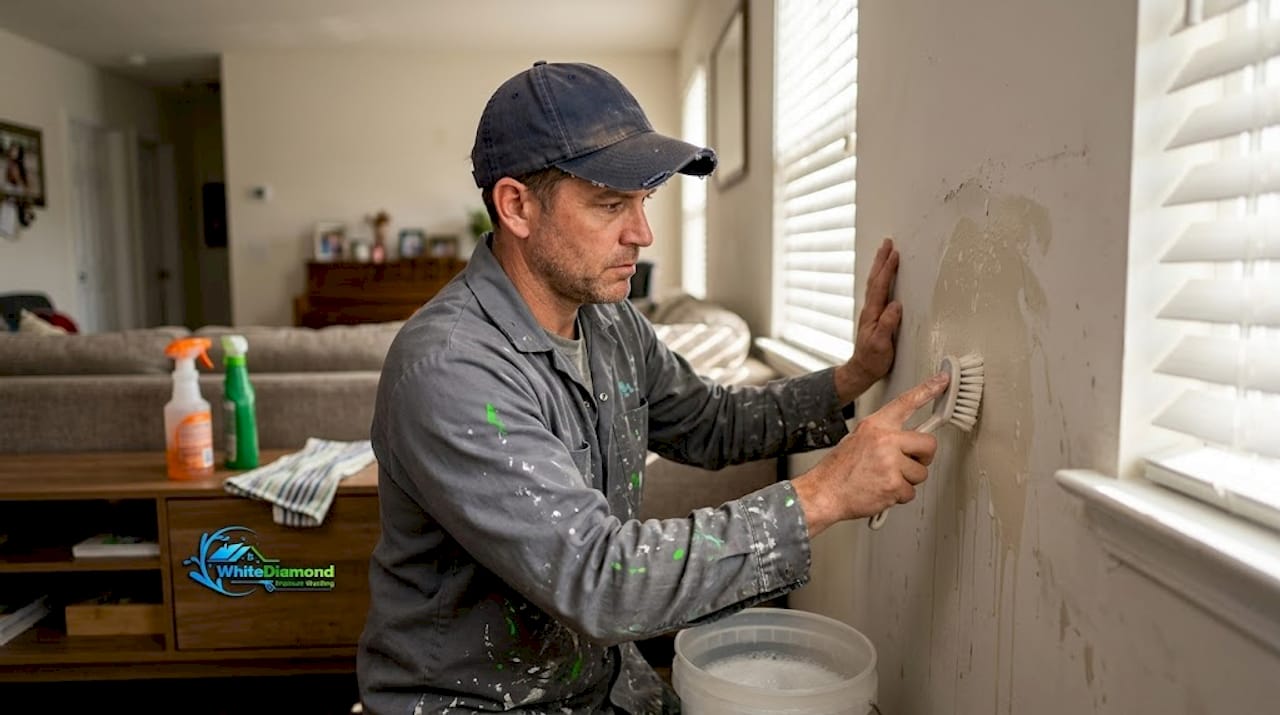
Pro Tip: Never scrub mildew dry. Misting the surface lightly before scrubbing reduces the number of spores that go airborne during removal.
Choosing the right products and chemicals: Bleach vs. vinegar and more
Not all mildew removal products work the same way, and the surface you are treating makes a big difference in which one you should reach for.
Bleach is the most common choice, and it works very well on non-porous surfaces like tile, glass, and sealed countertops. But bleach does not penetrate porous surfaces and only kills mildew on the surface layer. Vinegar, used undiluted, kills approximately 82% of mold species and penetrates deeper into porous materials like wood and grout.
| Product | Best for | Effectiveness | Safety concerns |
|---|---|---|---|
| Bleach solution | Tile, glass, sealed grout | Very high on non-porous | Fumes, never mix with ammonia |
| White vinegar | Wood, porous materials | High, slower acting | Low risk, mild smell |
| CLR Mold & Mildew Remover | Multiple surfaces | Very high, EPA Safer Choice | Follow label instructions |
| Clorox Tilex | Bathroom tile and grout | Kills 99.9% in 5 minutes on non-porous | Ventilate during use |
| Borax paste | Fabric, wood | Moderate to high | Low toxicity |
Here are the key safety rules every Citrus County homeowner should follow:
- Never mix bleach with vinegar or ammonia. The chemical reaction produces toxic chlorine gas.
- Always work in a ventilated area when using bleach-based products.
- Test any product on a small, hidden area before applying it broadly.
- Store all cleaning chemicals out of reach of children and pets.
- Rinse surfaces thoroughly after treatment to remove chemical residue.
Pro Tip: If you are unsure which product to use, vinegar is your safest starting point, especially on wood, painted surfaces, or anywhere children or pets spend time. It is slower but gentler. Knowing how to avoid pressure washing mistakes also helps when using any cleaning product on exterior surfaces.
Preventing mildew recurrence: Maintenance and moisture control tips
Removing mildew once is a win. Keeping it away for good requires a consistent routine built around controlling moisture in and around your home.
Moisture is the single biggest driver of mildew growth. In Citrus County, that means you are battling high humidity every day, not just after a rainstorm. The good news is that a few smart habits make a real difference.
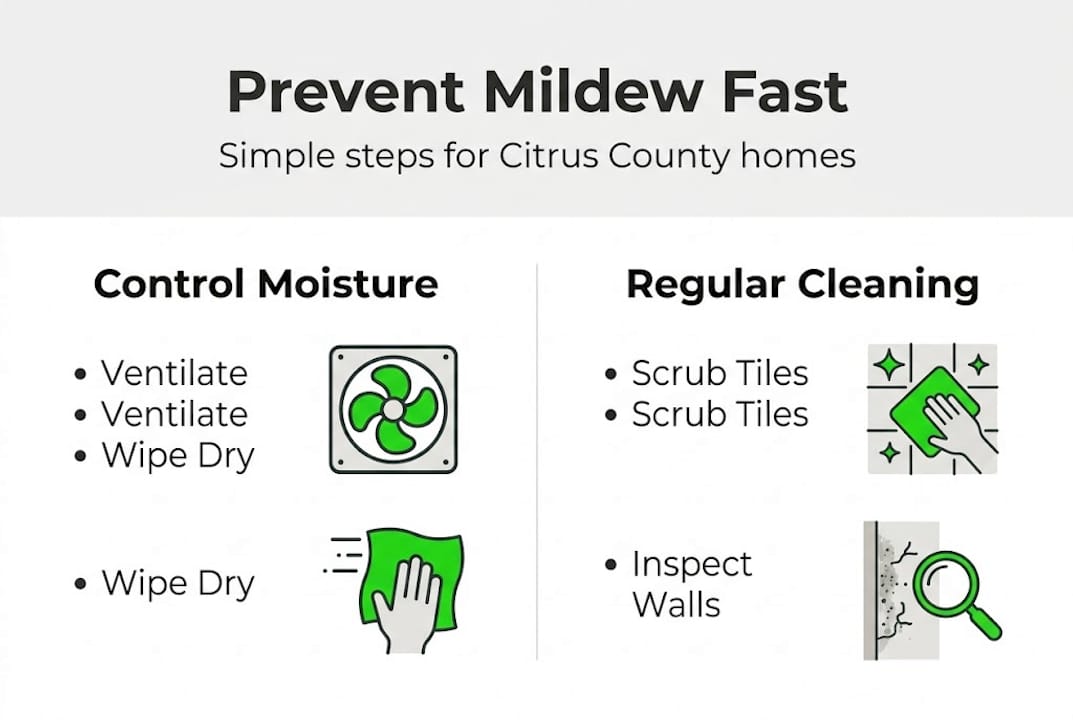
The EPA advises that the most effective long-term mildew prevention involves keeping surfaces dry, maintaining proper ventilation, and addressing any water intrusion immediately. These are not one-time tasks. They are ongoing habits.
Practical prevention tips for Citrus County homeowners:
- Run bathroom exhaust fans during and for 20 minutes after every shower.
- Fix leaky pipes and faucets immediately. Even slow drips feed mildew growth.
- Keep gutters clean so water drains away from your home’s siding and foundation.
- Use a dehumidifier in rooms that tend to stay damp, like basements and laundry areas.
- Seal exterior cracks and gaps to prevent moisture from entering walls.
- Trim back vegetation near your home’s exterior to improve airflow and reduce shading.
Pro Tip: Citrus County’s rainy season runs roughly from June through September. Schedule a professional exterior cleaning before and after this period to stay ahead of mildew buildup on siding, driveways, and roofs.
Routine cleaning also plays a big role. Wiping down bathroom surfaces weekly, cleaning grout every few months, and inspecting your roof and siding after storms all reduce the chances of a major mildew outbreak. Learn more about preventing exterior mold and pay attention to the signs you need pressure washing before mildew becomes visible damage. For a full routine approach, explore effective surface cleaning practices built for local conditions.
What most mildew removal guides miss: Local realities for Citrus County homes
Most mildew removal articles are written with a national audience in mind. They give solid general advice, but they miss the specific conditions that make Citrus County different.
The humidity here does not just spike during storms. It lingers. Surfaces stay damp for longer than they would in a drier climate, which means mildew can return within days of being cleaned if the underlying moisture issue is not resolved. Grabbing a bottle of bleach and scrubbing away feels satisfying, but bleach leaves water residue that actually promotes regrowth on porous surfaces. Vinegar is safer and more effective on those materials, though it requires patience and a second application in stubborn cases.
We have seen homeowners repeat the same DIY cleaning cycle every few months because they treated the symptom rather than the source. For areas larger than 10 square feet, or when health issues are a concern, professional help is not just convenient. It is smarter. A professional can address local mildew removal with the right tools, the right technique, and a prevention plan that actually fits Citrus County’s climate.
Professional solutions for Citrus County mildew removal
When mildew persists despite your best efforts, or when it covers a large area of your home’s exterior, it is time to bring in professionals who know exactly how to handle it.

At White Diamond Pressure Washing, we specialize in low-pressure washing techniques that remove mildew safely without damaging siding, shingles, or painted surfaces. Our team understands Citrus County’s unique climate challenges and uses industry-approved products designed for thorough, lasting results. Whether you need a one-time deep clean or a seasonal maintenance plan, our pressure washing services are built around your home and your schedule. Explore our mildew removal expertise and get a free estimate today. Protecting your home starts with one call.
Frequently asked questions
How do I safely remove mildew from bathroom grout?
Mix 3/4 cup bleach per gallon of water, apply it to the grout, let it sit for 15 minutes, scrub with a stiff brush, rinse thoroughly, and dry the area completely. Always wear gloves and goggles, and keep the bathroom well-ventilated during the process.
Is it safe to use vinegar for mildew removal on wood?
Yes, vinegar works well on wood because it penetrates porous surfaces and kills around 82% of mold species. After cleaning, dry the wood thoroughly to prevent moisture from causing additional problems. You can also vacuum spores first, then apply a detergent rinse before the vinegar treatment.
When should I hire a professional for mildew removal?
Hire professionals when the affected area is larger than 10 square feet or when mildew is causing health concerns or structural surface damage. As reinforced by mold remediation experts, bleach on porous surfaces can make regrowth worse, making professional-grade solutions the smarter choice.
What precautions should I take when removing mildew?
Always wear PPE including gloves, a mask, and goggles to avoid inhaling spores. Never mix bleach with vinegar or ammonia because the combination produces toxic gas that poses a serious health risk.
Can mildew permanently damage home surfaces?
Yes, untreated mildew can progress into damaging mold that penetrates porous materials deeply and causes lasting structural damage. Acting fast when you spot mildew is always the smarter choice.
Recommended
- Top steps for effective surface cleaning in Citrus County – white-diamond-pressure
- Prevent exterior mold: boost health, home value, curb appeal – white-diamond-pressure
- Why safe cleaning methods matter for your Citrus County home – white-diamond-pressure
- 7 signs your house needs washing in Citrus County – white-diamond-pressure
- How To Prevent Bathroom and Shower Condensation & Mould